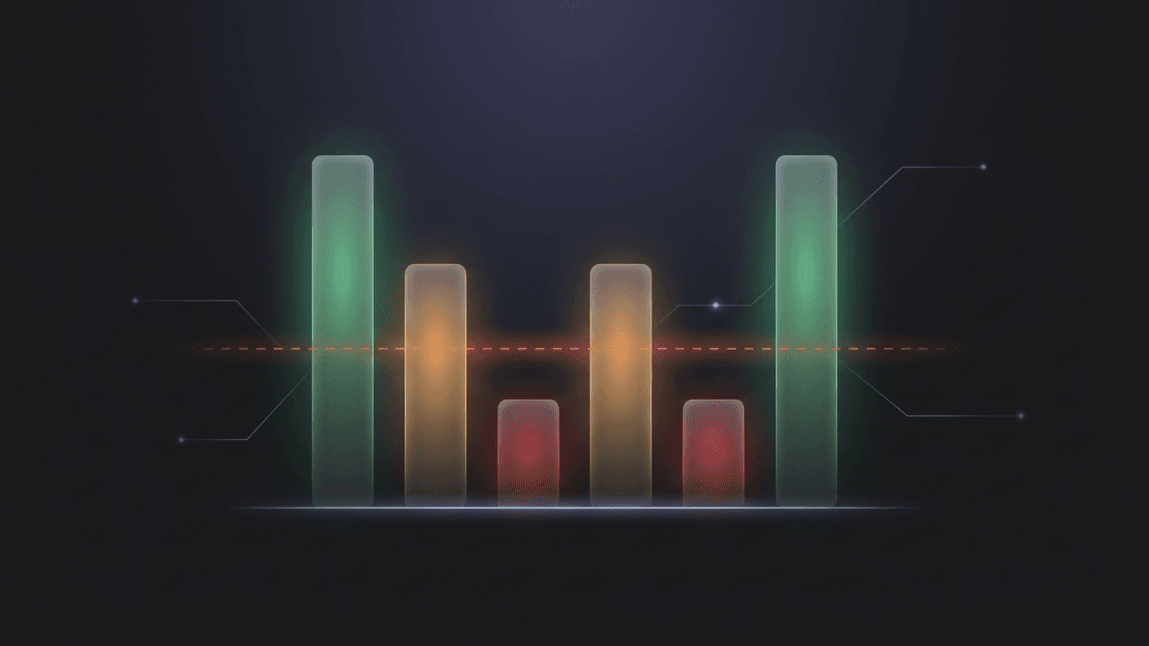
A single AI visibility score is misleading because the six major engines read the same page differently. GPT, Claude, Gemini, Llama, Perplexity, and Grok run different retrieval pipelines, apply different source-selection behavior, and show different observed citation patterns, so one page routinely scores well on two and fails on the others. That is why the Website AI Score free scan scores across all six in parallel and returns a per-model breakdown rather than an average. An average hides exactly the failures you need to fix. The useful question is never "does AI see my site" but "which engines can cite me, which cannot, and why do they differ." Six scores answer it. One score cannot.
Most AI visibility tools give you one number, and the number feels reassuring right up until a prospect asks Perplexity about your category and you are not there, despite a healthy score. The explanation is not that the tool lied; it is that it averaged, and averaging across engines that disagree produces a figure that describes none of them. Per-model scoring is the fix, and understanding why the engines disagree is what makes the per-model result actionable instead of merely more detailed.
Call it model divergence. The same page gets different verdicts from different engines for structural reasons, and a visibility tool that hides the divergence is measuring the wrong thing.
Why do the six engines disagree about the same page?
Because they are not one system. Some engines ground answers in a live web search step and cite what that search returns; others lean more on what the model already holds and retrieve less; some appear to emphasize freshness, others corroborated authority, and their handling of structured data versus visible text differs in observed results. Whether an engine reaches you through search or through memory changes what it needs from your page, and the six engines sit at different points on that spectrum. A page with strong structured data but a weak extractable answer can perform differently from a page whose strongest signal is its visible text, depending on each engine's retrieval and source-selection behavior. The exact weighting each commercial engine assigns to these signals is not observable from outside, so the useful measurement is the outcome: whether the page is retrieved, surfaced, and cited.
What does a per-model breakdown reveal that an average hides?
Three things you cannot see otherwise. Concentration risk: if all your visibility comes from one engine, a change to that engine can erase you overnight, and the breakdown shows the dependency before it bites. The specific failing layer: a page that fails only on the passage-lifting engines has a directness problem, and one that fails only on the trust-heavy engines has an entity problem, so the pattern across models diagnoses the cause. And the real coverage of your buyers: your customers are distributed across engines, so being strong on the two you happen to check and absent on the ones they use is a revenue leak an average would never show. The per-model view is share of model made concrete, page by page.
Which engines matter most for your business?
It depends on where your buyers ask, which is why the scan does not rank the engines for you. A developer tool lives or dies on ChatGPT and Claude; a consumer product is asked about in Google's AI surfaces and Perplexity; a news-adjacent brand is queried in Grok. The per-model breakdown lets you weight the result by your own audience instead of by a tool's opinion of which engine counts. If your traffic analytics, filtered correctly for AI referral sources, show buyers arriving from an engine you score poorly on, that is the gap to close first.
How do you fix a page that fails on specific engines?
Read the failure pattern, then fix the layer it points at. Failing on passage-lifting engines usually means the answer is buried, which the Content Creator's Rewrite mode fixes by restructuring the article while preserving its facts. Failing on trust-weighted engines usually means entity and schema, which is structured-data work. Failing everywhere usually means the page is unreadable, which the free scan flags before anything else. Registering gives you 10 free credits to diagnose the specific gaps and generate the fix, then re-scan to confirm the failing engines moved. That re-scan is the part single-score tools cannot offer, because they never told you which engine was failing to begin with.
Averaging visibility across six engines that disagree is like averaging six doctors' opinions into one diagnosis: the number is tidy and the patient is still sick on two of them. The teams that win across the AI surfaces are not the ones with the highest average, they are the ones who know exactly which engine cannot cite them and why, because that is the only version of the score you can act on.
Sources
- OpenAI, ChatGPT search: how one engine grounds answers in live retrieval. help.openai.com
- Google, AI features and your website: how Google's AI surfaces select and cite sources. developers.google.com
- Website AI Score, free scan: scored across GPT, Claude, Gemini, Llama, Perplexity, and Grok. websiteaiscore.com
- Website AI Score, search vs memory retrieval paths: why engines need different things from a page. View article
- Website AI Score, share of model: the measurement per-model scoring makes concrete. View article