LatestArticles
Stay updated with the latest insights and trends in AI optimization and digital marketing

AI-Citable Content Writing: What Makes an Article Citable
DIRECT ANSWER AI-citable content is content structured so a retrieval system can identify a relevant passage, preserve its meaning when extracted, and...

What 10 Free Credits Unlock: From Free Scan to Citable Content
DIRECT ANSWER A free Website AI Score account includes 10 credits, and 10 credits is enough to run a complete first cycle of AI visibility work withou...

AEO for Ecommerce: What the Scan Checks on a Product Page
DIRECT ANSWER For an ecommerce store, AEO comes down to whether AI engines can read, verify, and recommend your product pages when a shopper asks for ...

AI Citation Volatility: Why Citations Flicker and How to Stabilize Them
DIRECT ANSWER AI citation volatility is short-term variation in whether, or how often, a page appears as a cited source across repeated comparable que...

AI-Citable Landing Page Sections for WordPress, Shopify, Webflow
DIRECT ANSWER Landing and product pages go uncited for a reason blog posts do not: their copy is written to persuade, and AI engines cite copy that in...

Rewrite Existing Articles for AI Citation Without Losing the Facts
DIRECT ANSWER You can rewrite an existing article for AI citation without changing what it says. The fix for most uncited articles is structural, not ...
AI Content Gap Diagnosis: Find What Your Page Is Missing
DIRECT ANSWER An AI content gap is a relevant part of a target query that a page does not answer clearly enough to serve as a complete source, and it ...

Content Creator: From Search Phrase to Citable Article
DIRECT ANSWER The Website AI Score Content Creator turns a target search phrase into a publish-ready article built to be cited by AI engines. You give...

How to Get Traffic from Perplexity
DIRECT ANSWER You get traffic from Perplexity by being one of the sources it cites, because Perplexity shows its sources as clickable citations next t...

AI Visibility Trackers Compared: Monitoring vs Diagnosis
DIRECT ANSWER AI visibility trackers fall into two categories that get sold as one. Monitoring platforms (Profound, Peec AI, Otterly, Rankscale, and s...

AI Citation Decay: Definition, Causes, and How to Detect It
DIRECT ANSWER AI citation decay is a reduction in how often, or how consistently, an AI system cites a page over time while the page itself remains av...

AEO Audit Checklist: 20 Checks Before You Publish
DIRECT ANSWER An AEO audit checklist is the set of content-level checks a page should pass before you publish it, so an AI engine can select and quote...
Technical GEO Checklist: Rendering, Crawlers, Schema, Logs
DIRECT ANSWER A technical GEO checklist covers the engineering layer that decides whether generative engines can access, fetch, parse, and trust your ...

The GEO Readiness Audit Checklist: 20 Checks in Order
DIRECT ANSWER A GEO readiness checklist is a set of checks that tell you whether a website is ready to be cited by generative engines like ChatGPT, Ge...

AI Readability Audit: What Machine-Readable Actually Means
DIRECT ANSWER An AI readability audit checks whether AI engines can actually read your website: whether the content arrives as parseable text, whether...

Why We Score AI Visibility Across Six LLMs
DIRECT ANSWER A single AI visibility score is misleading because the six major engines read the same page differently. GPT, Claude, Gemini, Llama, Per...

Content AI Score: How to Score an Article for AI Citability
DIRECT ANSWER A content AI score measures whether a specific article can be selected and quoted by an AI engine for a specific search phrase. It is di...

Rate My Website for AI: What the Free Scan Finds
DIRECT ANSWER You can rate your website for AI search in about a minute, for free, with no signup and no card. Paste a URL into the Website AI Score f...

After Citation: The Era of Agentic Recommendation
DIRECT ANSWER Being cited is the current goal, but the next one is being acted on. As AI agents move from answering questions to completing tasks, buy...
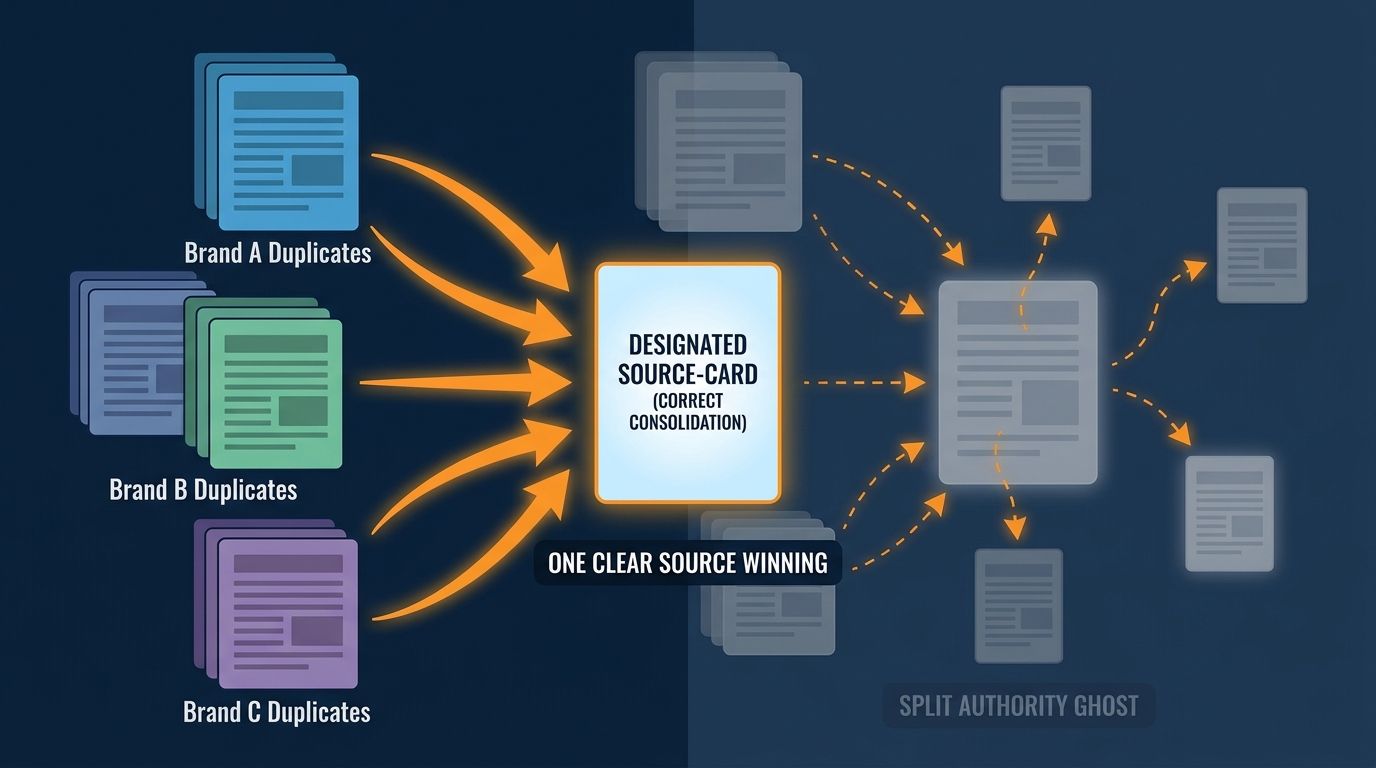
Canonical Tags in Multi-Brand Setups: The Citation Killer
DIRECT ANSWER In multi-brand and multi-site setups, canonical tags decide which version of duplicated content earns the citation, and misconfigured ca...

The Sitemap.xml That AI Crawlers Actually Want
DIRECT ANSWER AI crawlers mostly use the same infrastructure as regular search: your standard XML sitemap and robots.txt, not a novel AI-specific file...

Brand Naming for AEO: Generic vs Specific Names
DIRECT ANSWER A distinctive brand name is easier for AI engines to treat as an entity; a generic one is a liability. When your name is a common phrase...
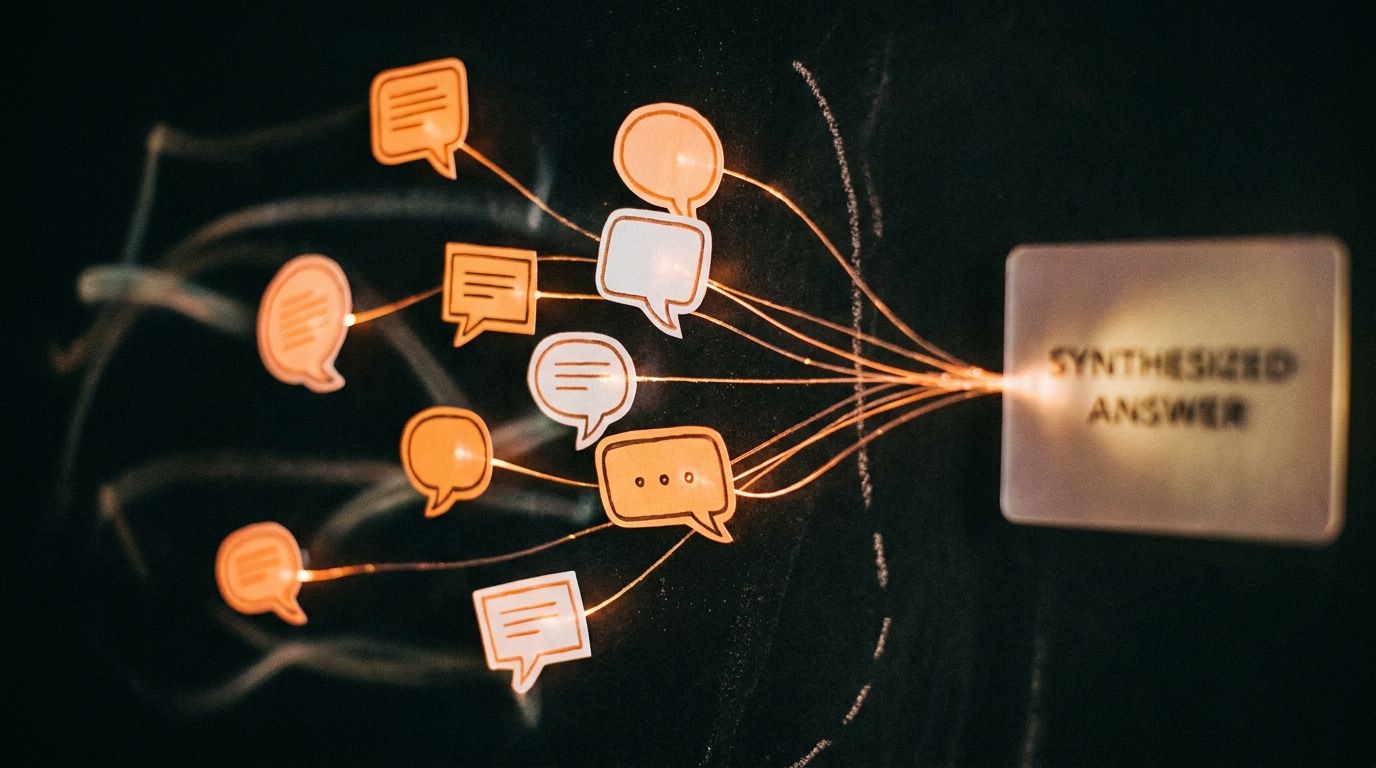
Internal Linking for AEO: The Citation-Pull Pattern
DIRECT ANSWER Internal linking helps AEO by doing two things engines rely on: it helps crawlers discover and reach your content, and it builds topical...

Reddit Citations: How AI Uses UGC as Source of Truth
DIRECT ANSWER AI engines cite Reddit and other user-generated content heavily because it reads as authentic human experience, exactly what engines wan...
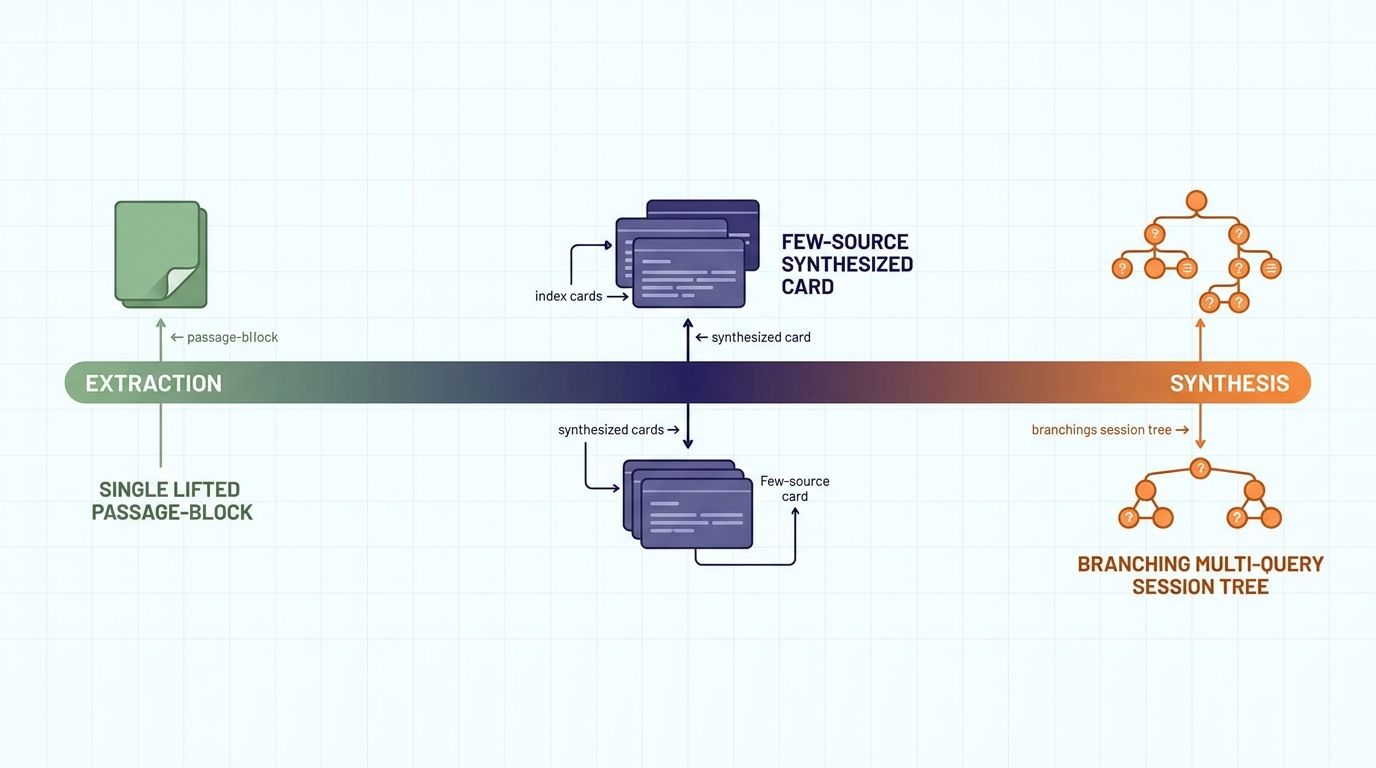
AI Mode vs AI Overviews vs Featured Snippets
DIRECT ANSWER Featured snippets, AI Overviews, and AI Mode are three different surfaces on a spectrum from extraction to synthesis. A featured snippet...

KPI Dashboards for AEO: 9 Charts Your CMO Will Read
DIRECT ANSWER An AEO KPI dashboard a CMO will actually read has nine charts across three questions: are we visible (citation frequency, share of model...

The Monthly Citation Audit: A 12-Step Routine
DIRECT ANSWER A monthly citation audit is a fixed routine that catches AEO drift before it costs you. Run twelve checks in three groups: presence (are...
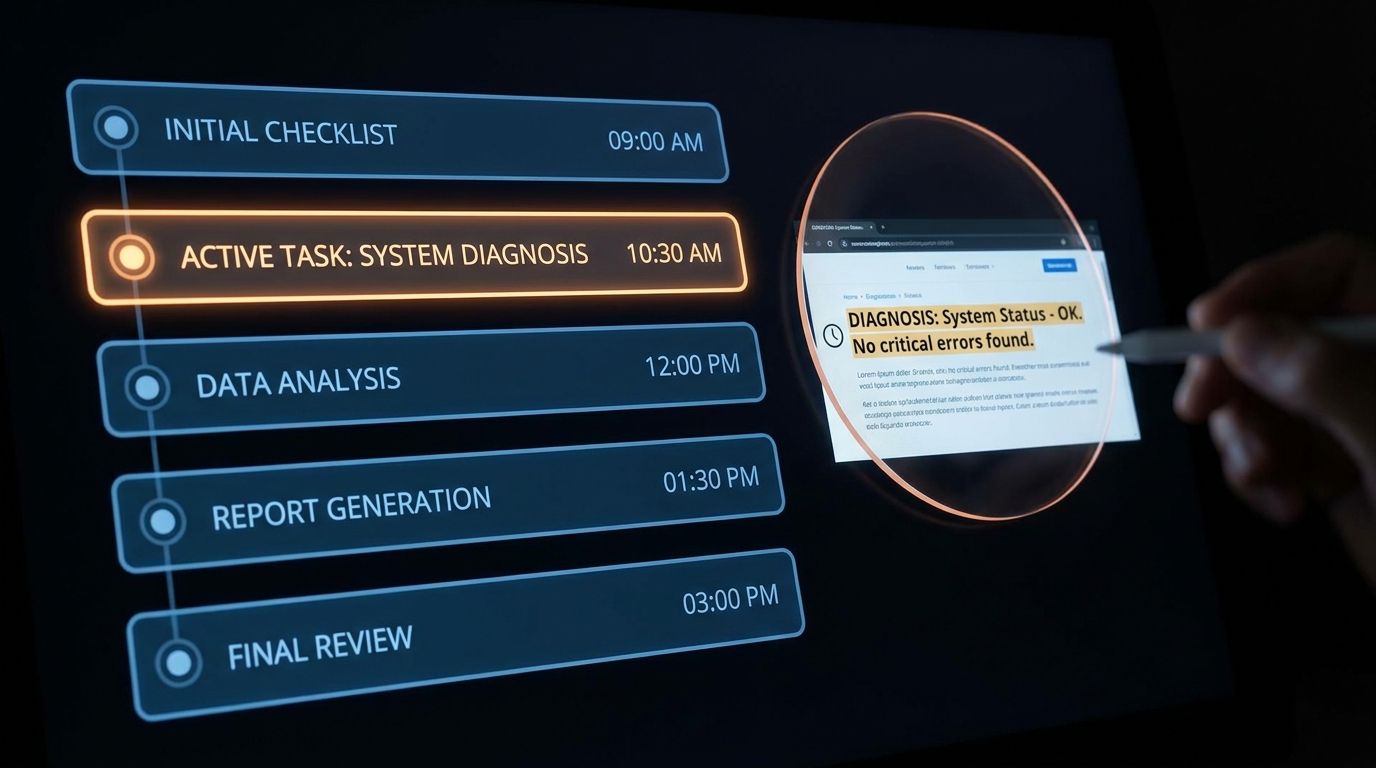
Hiring an AEO Specialist: A 60-Minute Skills Test
DIRECT ANSWER A 60-minute skills test tells you whether an AEO candidate understands mechanism or just vocabulary. Give them a live URL and ask five t...
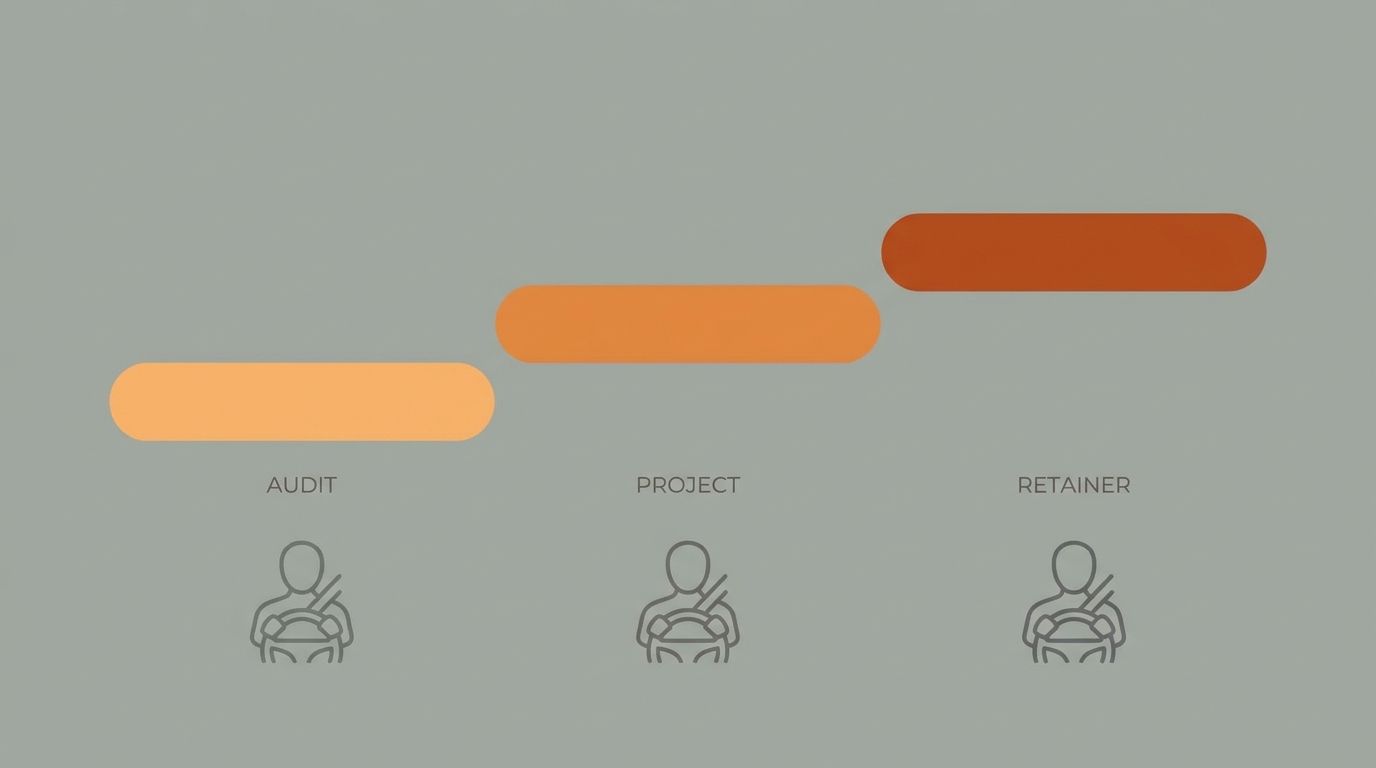
How Much Does AEO Consulting Actually Cost?
DIRECT ANSWER AEO pricing spans a wide range because the work does. A one-off audit typically runs from the high three figures to low four figures. A ...
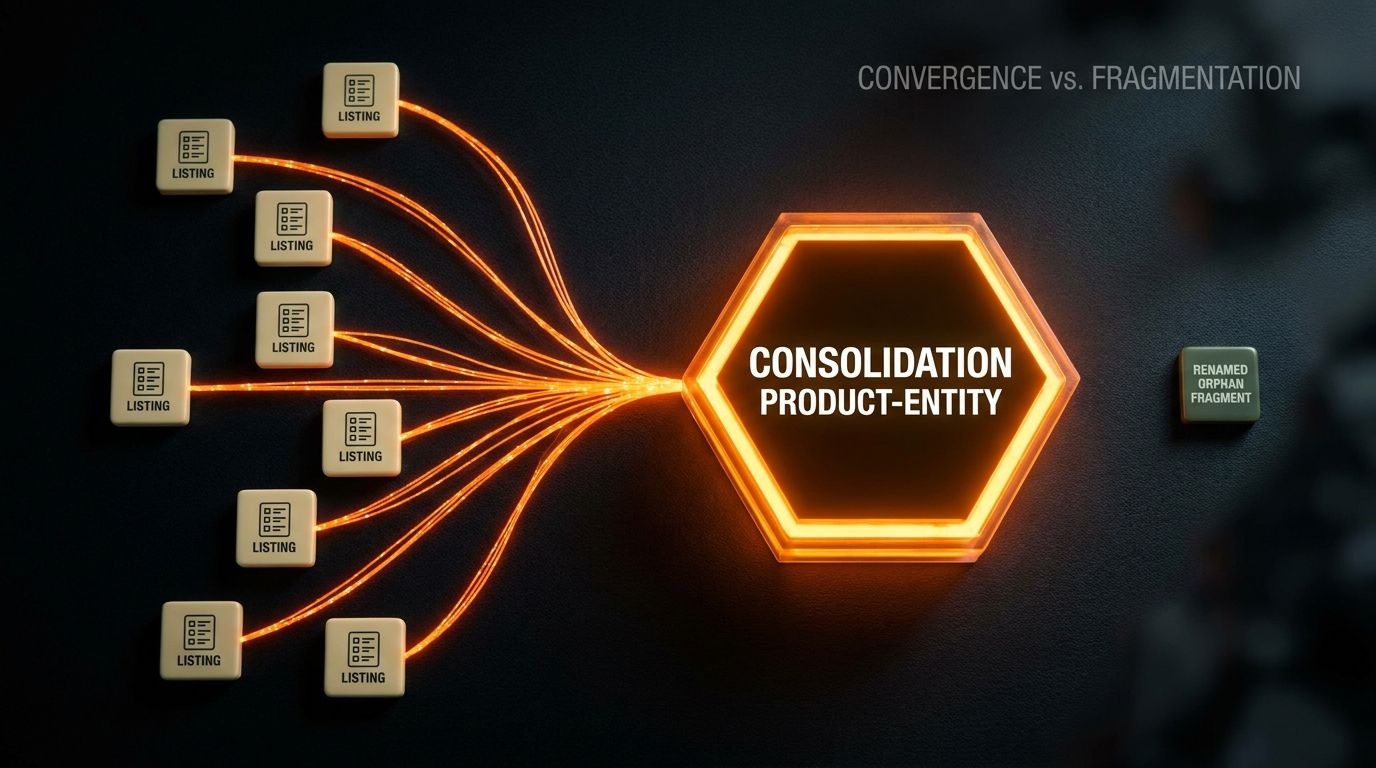
AEO for Marketplaces: When You Sell on 12 Sites
DIRECT ANSWER When the same product sells on twelve sites, AI engines face a canonicalization problem: which listing represents the product, and which...
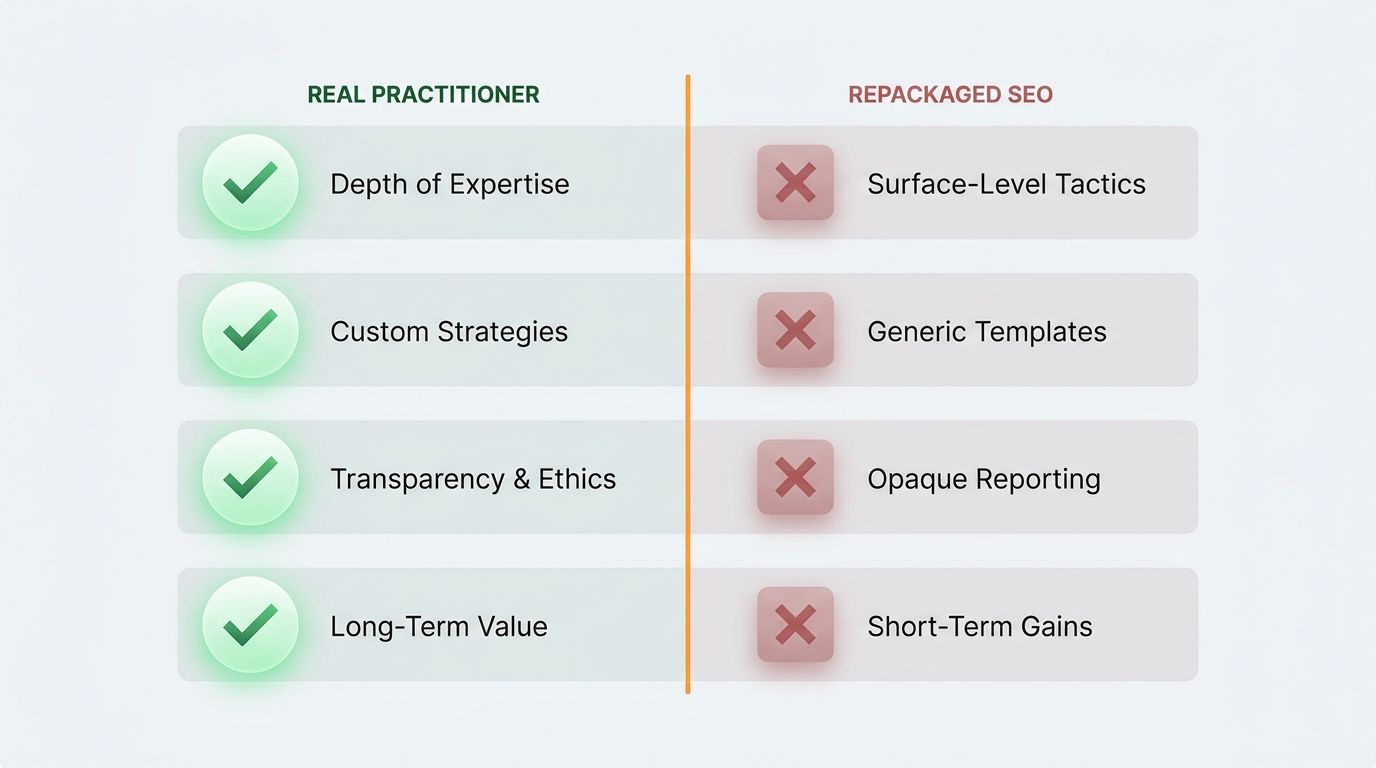
How to Evaluate an AEO Agency: Four Questions
DIRECT ANSWER To evaluate an AEO agency, test whether they optimize for selection or just resell ranking. Four questions separate the real thing from ...
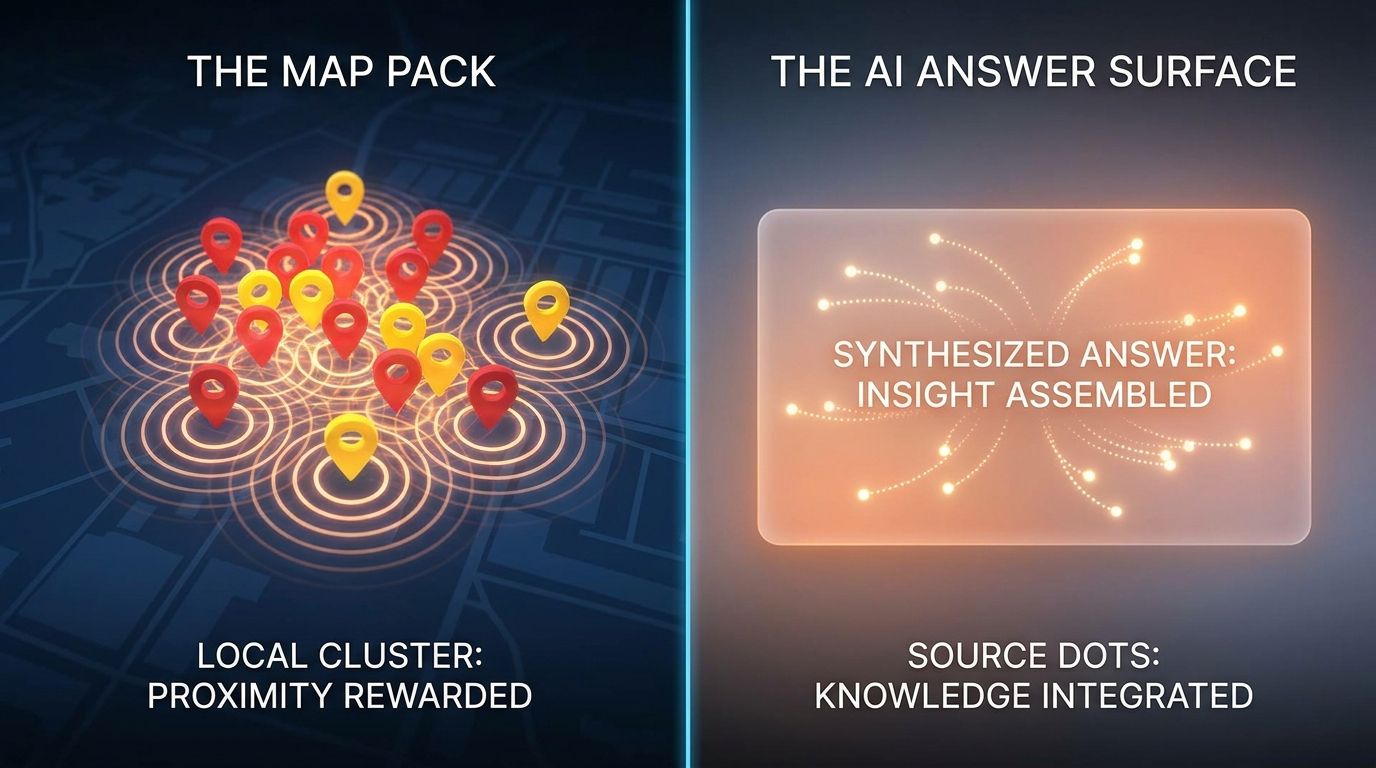
AEO for Local: AI Overviews vs the Map Pack
DIRECT ANSWER Local AI visibility runs on two different surfaces that reward different things. The map pack is driven by proximity, your Business Prof...

AEO for Fintech: The Financial Trust Stack
DIRECT ANSWER Fintech sites earn AI citations by building a financial trust stack: verified corporate and regulatory identity, claims grounded in disc...

AEO for Medical: Citations That Respect Health Rules
DIRECT ANSWER Health and medical sites earn AI citations by building what this article calls a clinical trust stack: verifiable author credentials, ci...
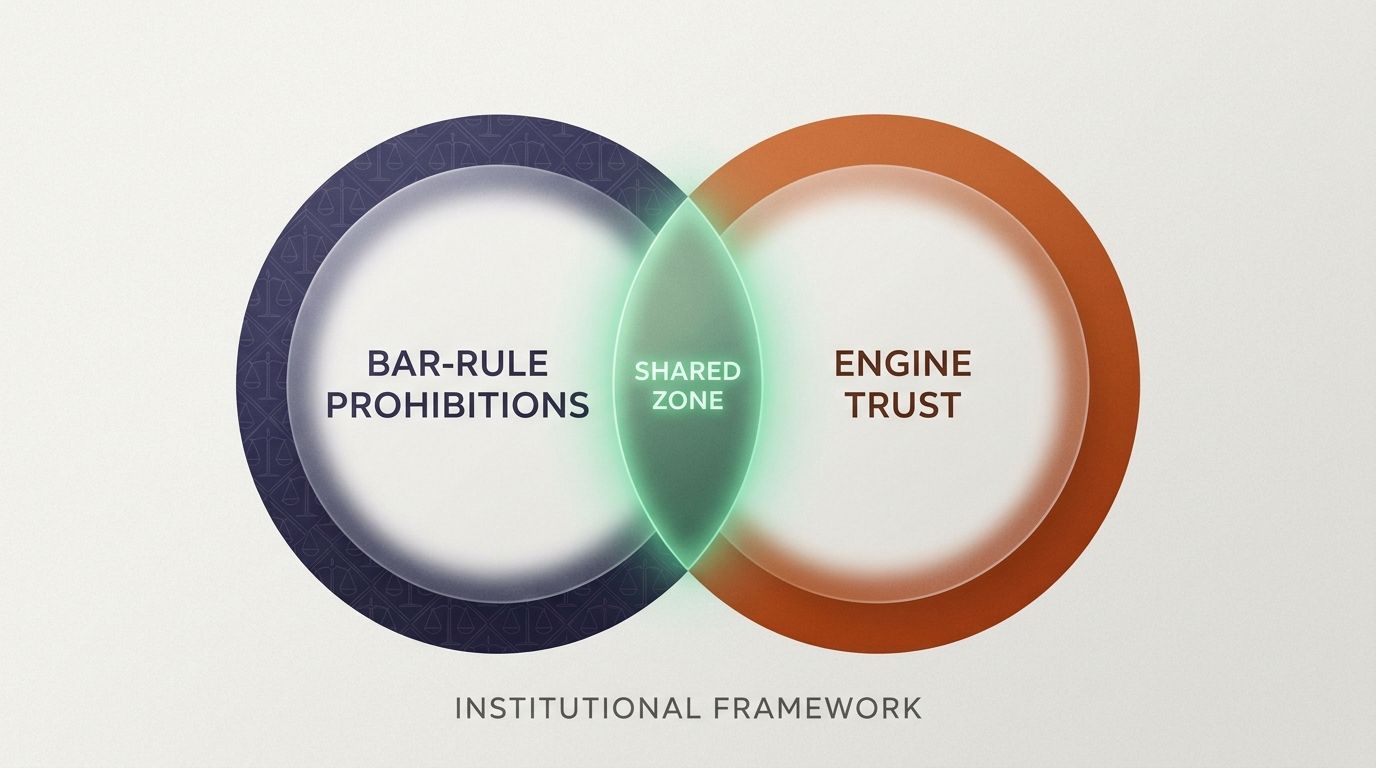
AEO for Legal: Citations Without Triggering Bar Rules
DIRECT ANSWER Law firms can earn strong AI citations without violating attorney advertising rules, because the two goals pull in the same direction. B...

What Is AEO? Answer Engine Optimization Explained
DIRECT ANSWER AEO, Answer Engine Optimization, is the practice of making your content the source AI engines cite when they answer a question. It diffe...

Adversarial AEO: How Competitors Poison Your AI Citations
DIRECT ANSWER Adversarial AEO is the practice of degrading a competitor's AI citation standing, or defending against it being done to you. The real at...

Implementing UCP: A Working Catalog Feed Walkthrough
DIRECT ANSWER Implementing UCP starts with one deliverable: a catalog an AI agent can read, compare, and act on. The Universal Commerce Protocol, co-d...

AEO for B2B SaaS: The 5 Pages You Must Ship First
DIRECT ANSWER A B2B SaaS company starting AEO should not start with a blog. It should ship five pages first, because these are the pages buyers actual...

100-Token Rule for Ecommerce: Server-Side Header Injection
DIRECT ANSWER On an ecommerce product page, the first 100 tokens an AI engine reads decide whether it understands the product, and on most stores thos...

The Cookie Banner Tax: Compliance UI vs First-Token Visibility
DIRECT ANSWER Your cookie banner, consent overlay, and compliance interstitials can be the first thing an AI crawler encounters, and sometimes the onl...

How Vision-Language Models Misread Your UI: The Carousel Trap
DIRECT ANSWER AI agents increasingly look at your page as an image, not just as code, and vision-language models misread common UI patterns in predict...

PDFs Are AEO Black Holes: The Whitepaper Migration Pattern
DIRECT ANSWER Your best content is often locked in PDFs, whitepapers, research reports, guides, and AI engines barely read it. A PDF is a black hole f...

Brand Co-Mentions: Why X by Y Patterns Compound Faster
DIRECT ANSWER When your brand consistently appears next to an established entity, you inherit some of its standing in the AI's understanding of the wo...

12 Reasons Your B2B SaaS Homepage Will Never Get Cited
DIRECT ANSWER The typical B2B SaaS homepage is built to convert a human visitor and is structurally incapable of being cited by an AI engine. Twelve s...

Information Gain: How AI Penalizes Consensus-Echo Content
DIRECT ANSWER If your content says the same thing as the ten pages already cited for a query, an AI engine has no reason to add you. It already has th...
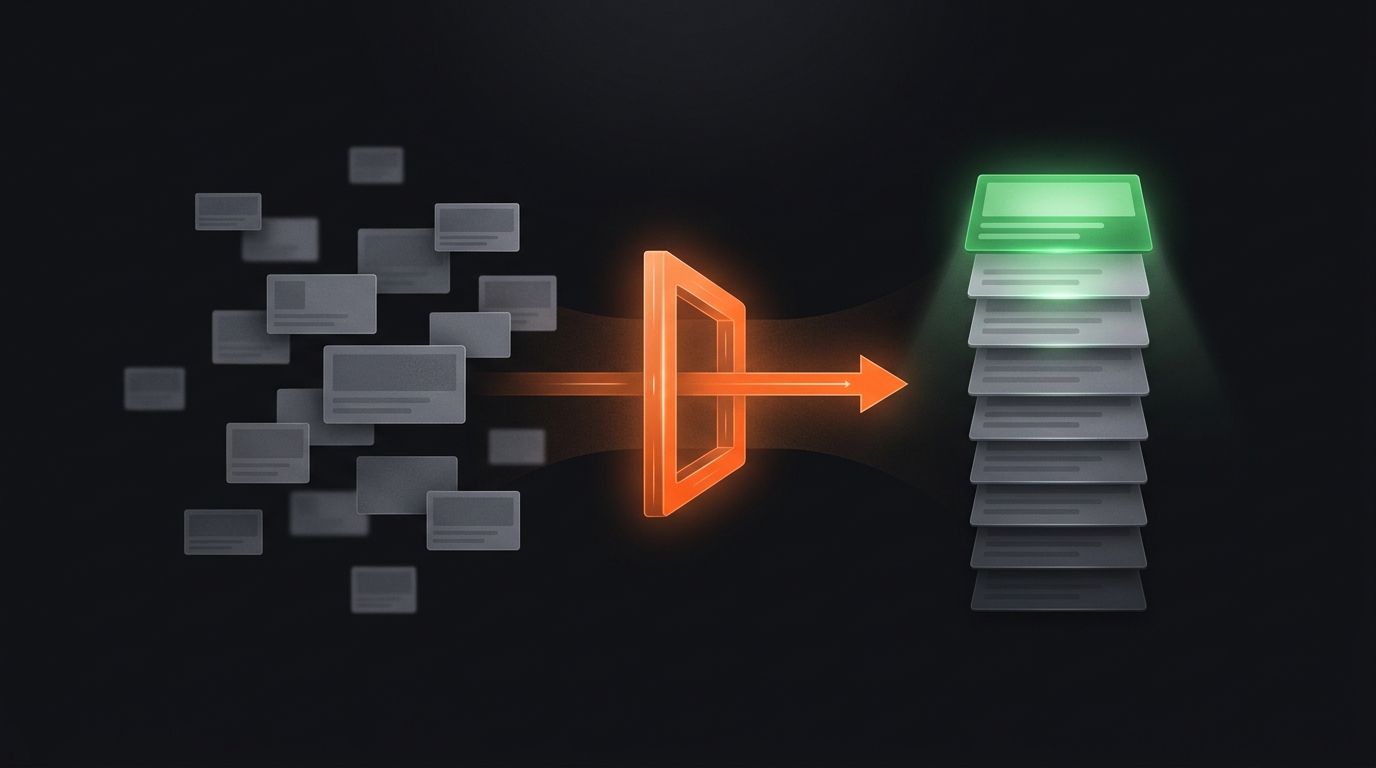
Rerankers for AEO: When BGE-Reranker Beats Cohere
DIRECT ANSWER A reranker is the second pass in retrieval: after the embedding search returns a rough candidate set, the reranker re-scores those candi...

MTEB Misleads: Picking an Embedding Model for AEO
DIRECT ANSWER The MTEB leaderboard ranks embedding models on aggregate benchmark scores, and picking the top-ranked model for your use case is usually...

Recursive vs Semantic Chunking: A Decision Tree
DIRECT ANSWER Before an AI engine can cite your page, it splits the page into chunks, and how it splits decides what it can retrieve. Two methods domi...

Five Citation Patterns: Stable, Volatile, Carousel, Decay, Ghost
DIRECT ANSWER AI citations are not binary. The same query run repeatedly reveals five distinct patterns in how a source gets cited over time: Stable (...

Zero-Budget AI Visibility Audit: 5 Tools, 90 Minutes
DIRECT ANSWER You can audit your site's AI visibility in about 90 minutes using five free tools you already have access to: View Source for the empty-...

Sentiment Quotient: What Reliable vs Innovative Means for You
DIRECT ANSWER When an AI engine cites your brand, the adjectives it attaches are not decoration. They are the recommendation. "A reliable option" send...

7 AEO Metrics That Actually Predict Revenue
DIRECT ANSWER Most AEO dashboards track vanity metrics that move without revenue moving. Seven metrics actually predict whether AI visibility turns in...
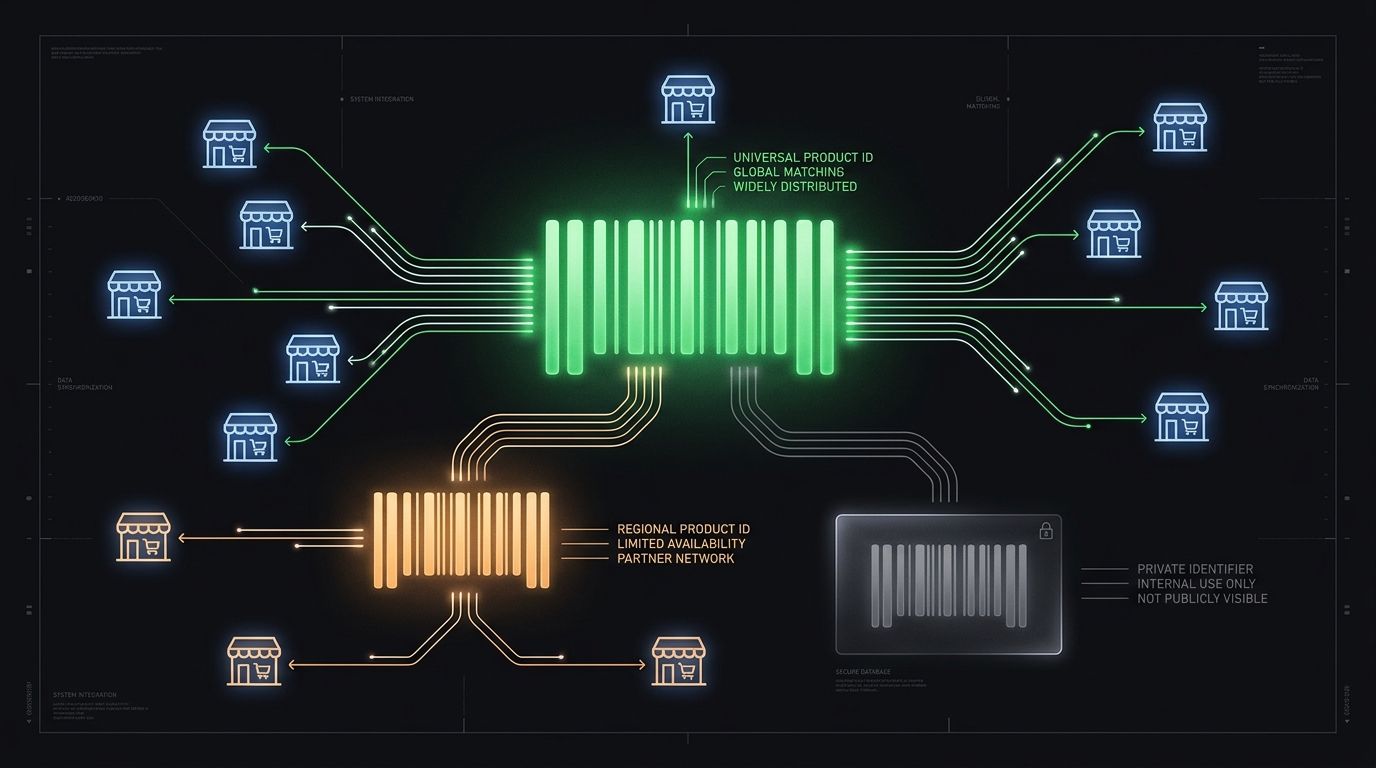
GTIN, MPN, SKU: AIs Cross-Source Product Verification Signal
DIRECT ANSWER GTIN, MPN, and SKU look like three versions of the same thing and they are not. GTIN is the global identifier, the same number wherever ...

Product Schema: The 14 Fields That Determine Visibility
DIRECT ANSWER A Product schema with a name, price, and image is invisible to an AI shopping agent that needs to compare it against alternatives. Fourt...

OpenAI ACP Spec: What Your Checkout Must Return
DIRECT ANSWER Under the Agentic Commerce Protocol, an agent does not click through your checkout UI. It exchanges structured messages with your backen...
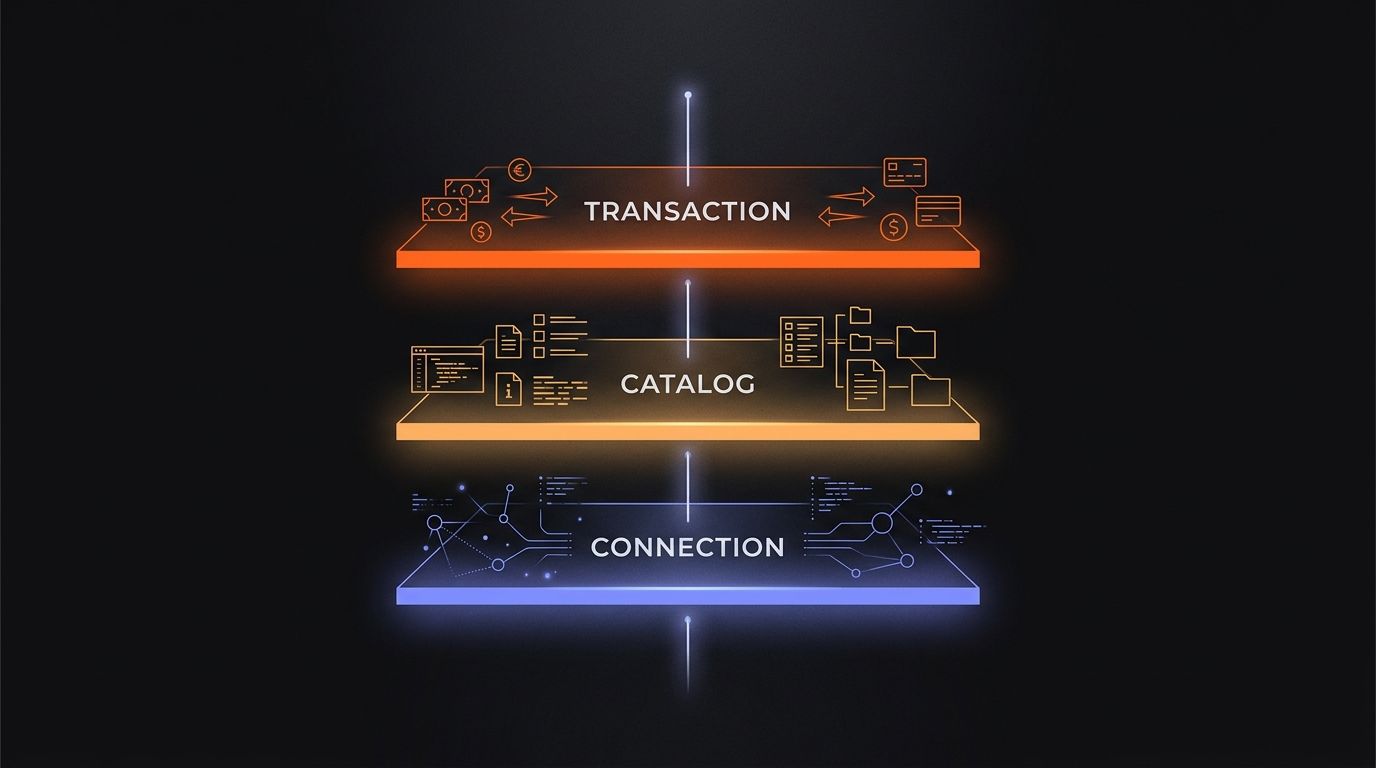
ACP vs UCP vs MCP: The Three Agentic Commerce Protocols Compared
DIRECT ANSWER Three protocols shape how AI agents interact with commerce, and the cleanest way to understand them is by the layer each centers on. MCP...
Schema.org for AEO: The 8 Properties That Move Citations
DIRECT ANSWER Most schema markup is decoration. AI engines read a small set of properties that actually change whether you get cited, and ignore the r...

The Anti-Patterns: 7 Content Shapes AI Overviews Refuse to Cite
DIRECT ANSWER AI Overviews systematically skip certain content shapes no matter how good the underlying information is, because the shape makes the co...

AI Search vs AI Memory: Which Path Are You On?
DIRECT ANSWER When an AI engine mentions your brand, it is drawing from one of two completely different sources: real-time search (it fetched a live p...
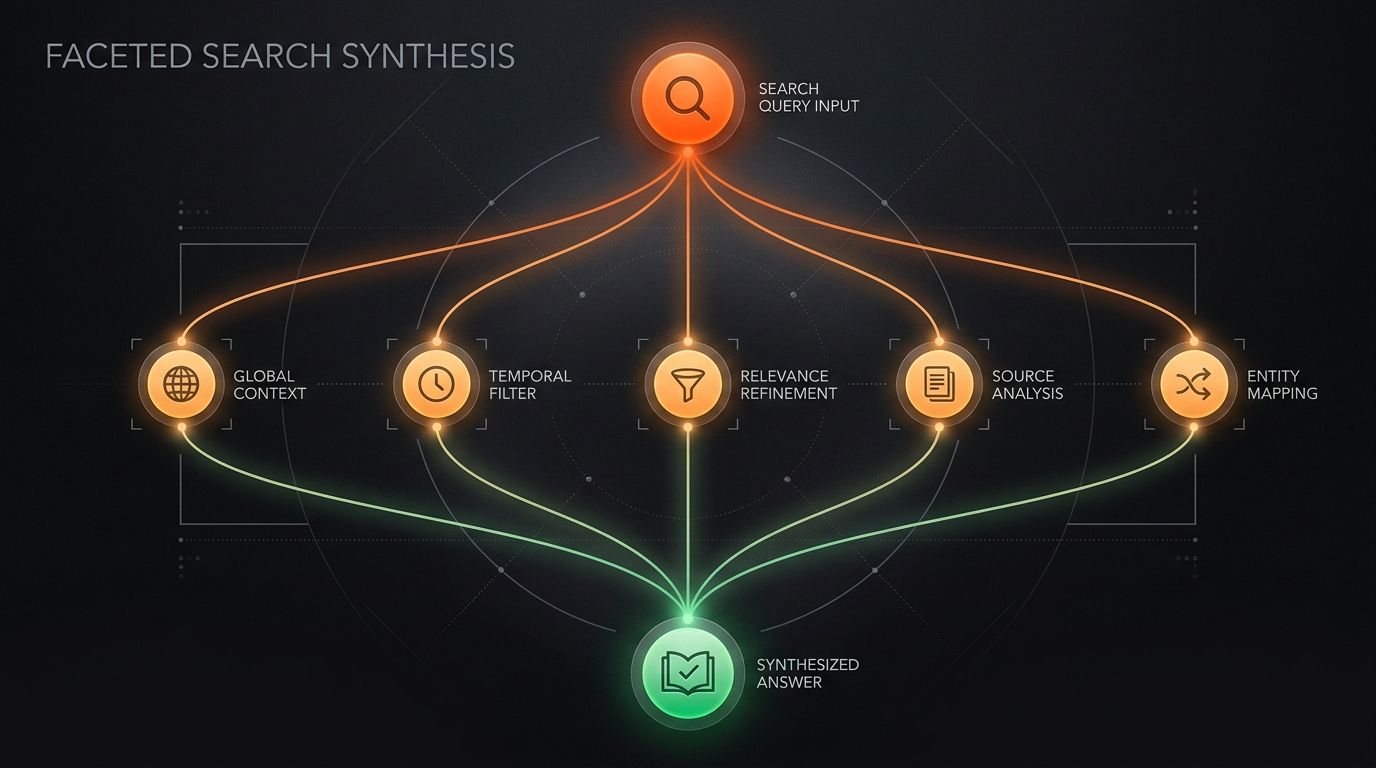
Query Fan-Out: Why AI Runs 5 Searches Per Prompt
DIRECT ANSWER When a user asks an AI engine one question, the engine usually does not run one search. It runs three to eight. This is query fan-out: t...

Why Your ChatGPT Brand Description Is Three Versions Old
DIRECT ANSWER When ChatGPT describes your brand using your old pricing, a product you sunset, or a positioning you abandoned, the cause is almost neve...

The Citation Stack: How an LLM Picks Sources
DIRECT ANSWER An LLM picks sources through four sequential layers, not one ranking function. Retrieval pulls candidate documents from the index. Scori...
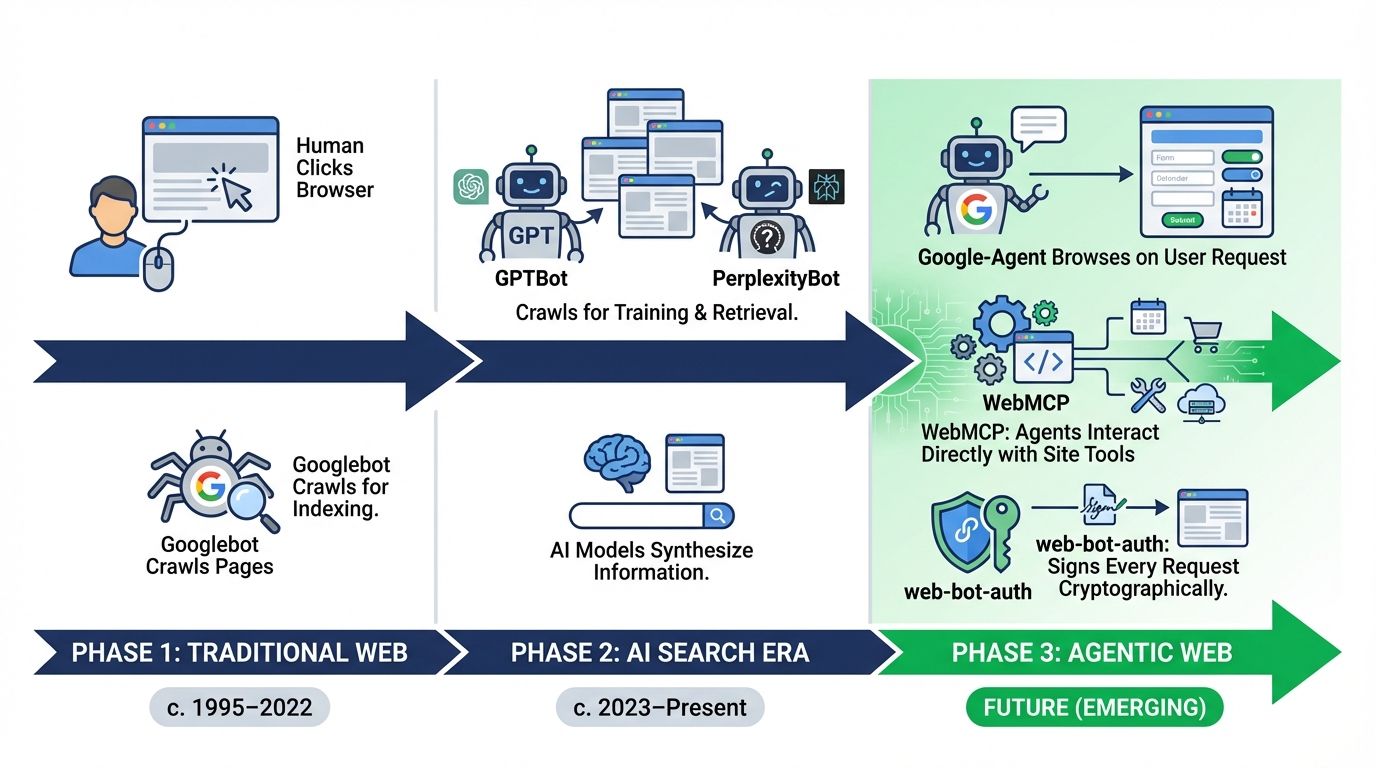
Google-Agent, WebMCP, and web-bot-auth: The Technical Architecture of the Agentic Web
DIRECT ANSWER Three developments landed in early 2026 that most SEO coverage missed, and they're three layers of one architectural shift, from a web h...
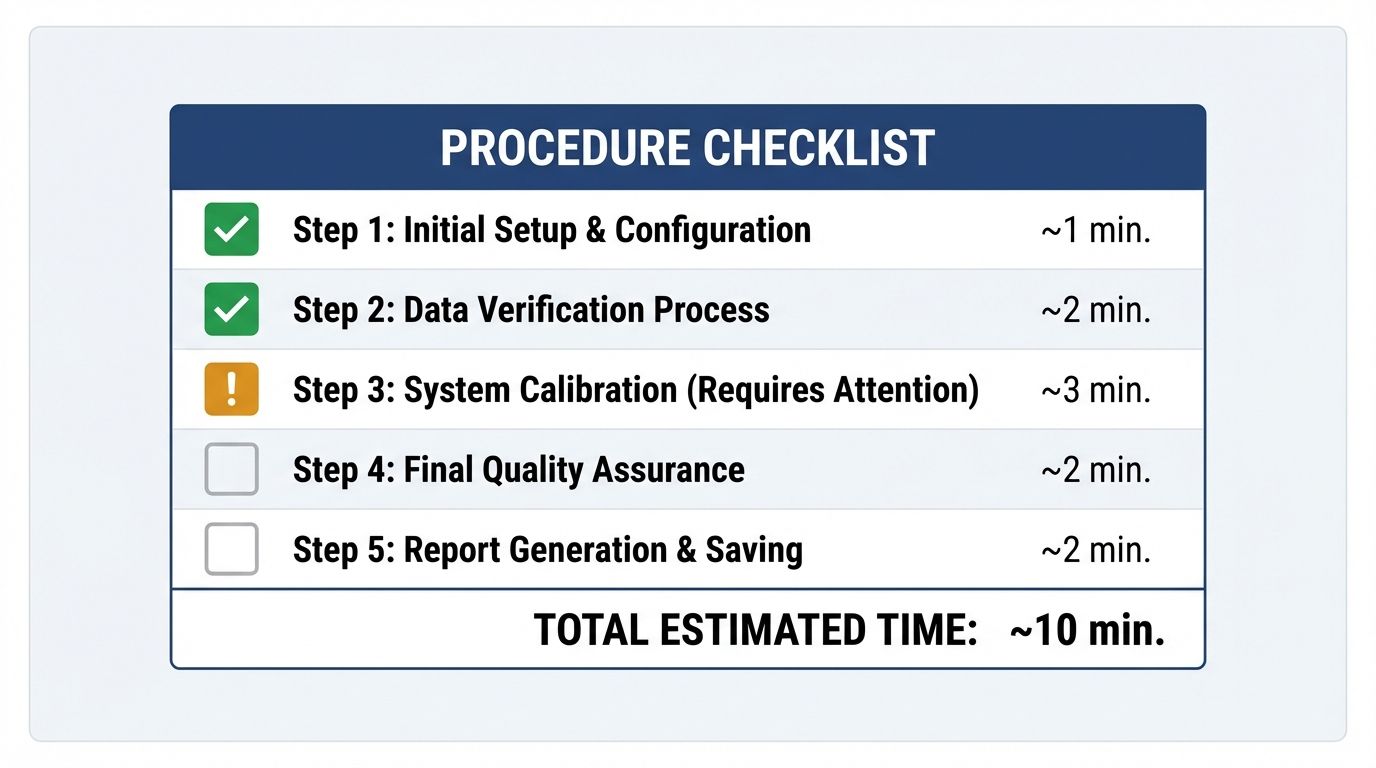
The 10-Minute AI Readability Audit Any Marketer Can Run Today
DIRECT ANSWER You don't need to know what a RAG pipeline is, or understand cosine similarity, token budgets, or heading-hierarchy semantics. You need ...
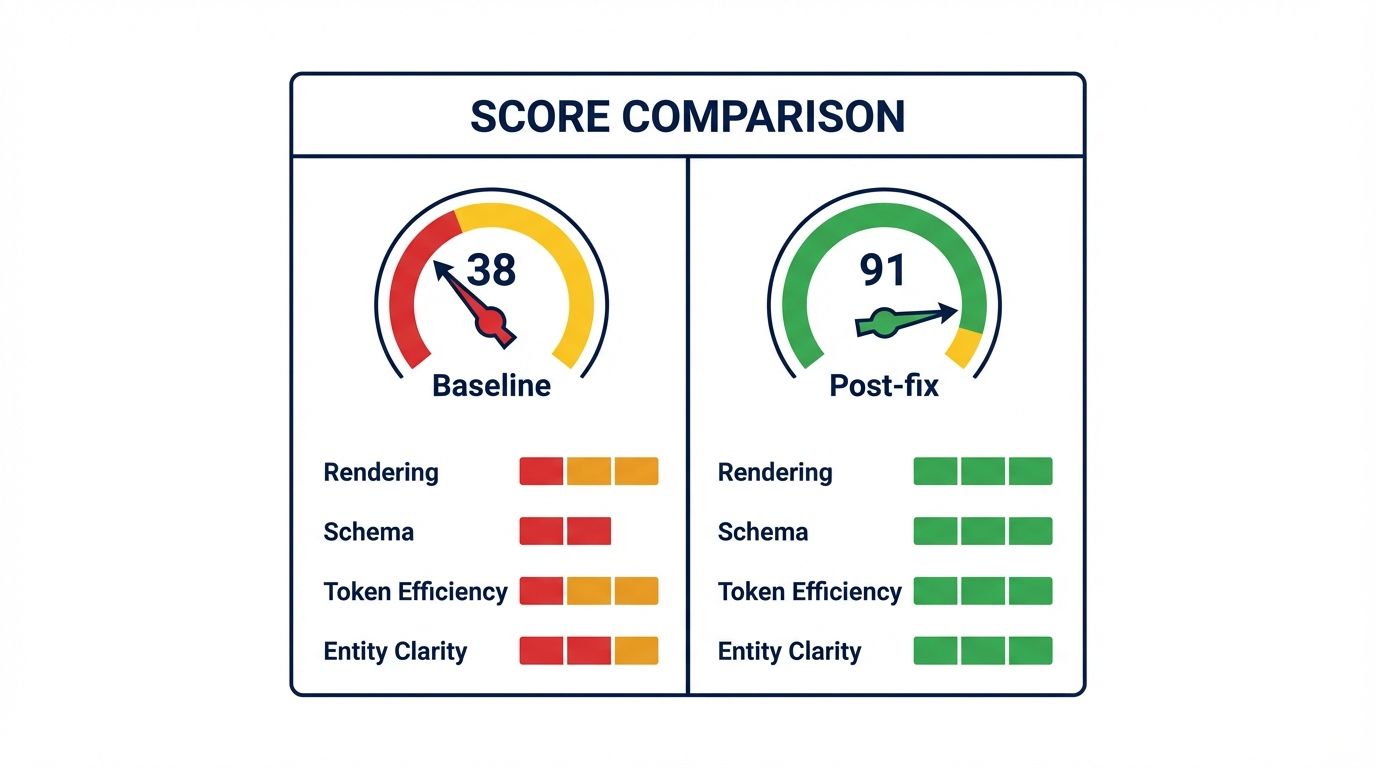
Before and After: SaaS Landing Page Goes from Score 38 to 91
CASE STUDY · CS-AEO-20260316-001 Classification: forensic audit / AEO architecture. Subject: B2B SaaS platform, category AI tooling. The audit request...
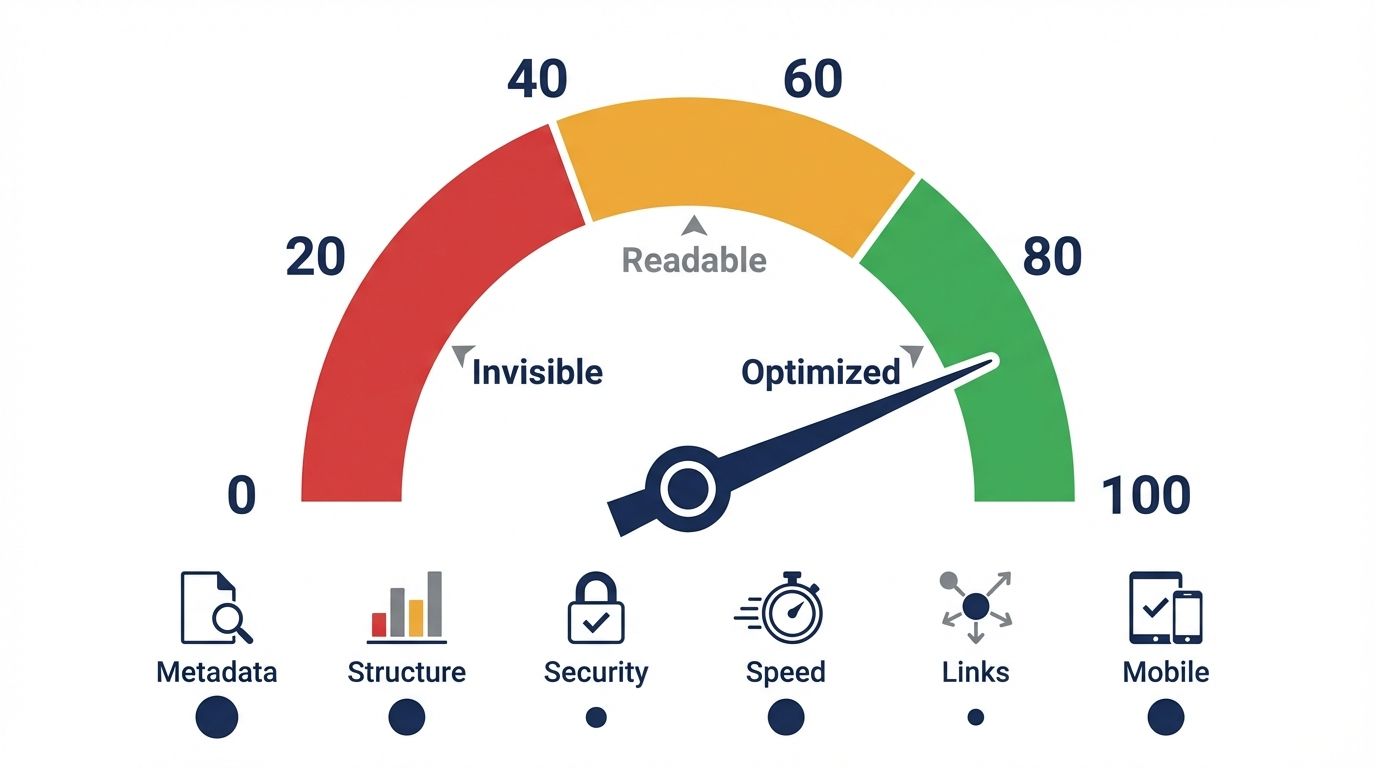
Score 0 to 100: Every AEO Signal We Measure and Why
DIRECT ANSWER The Website AI Score is a composite measure of how reliably an AI system can crawl, parse, chunk, embed, and retrieve the content on a U...
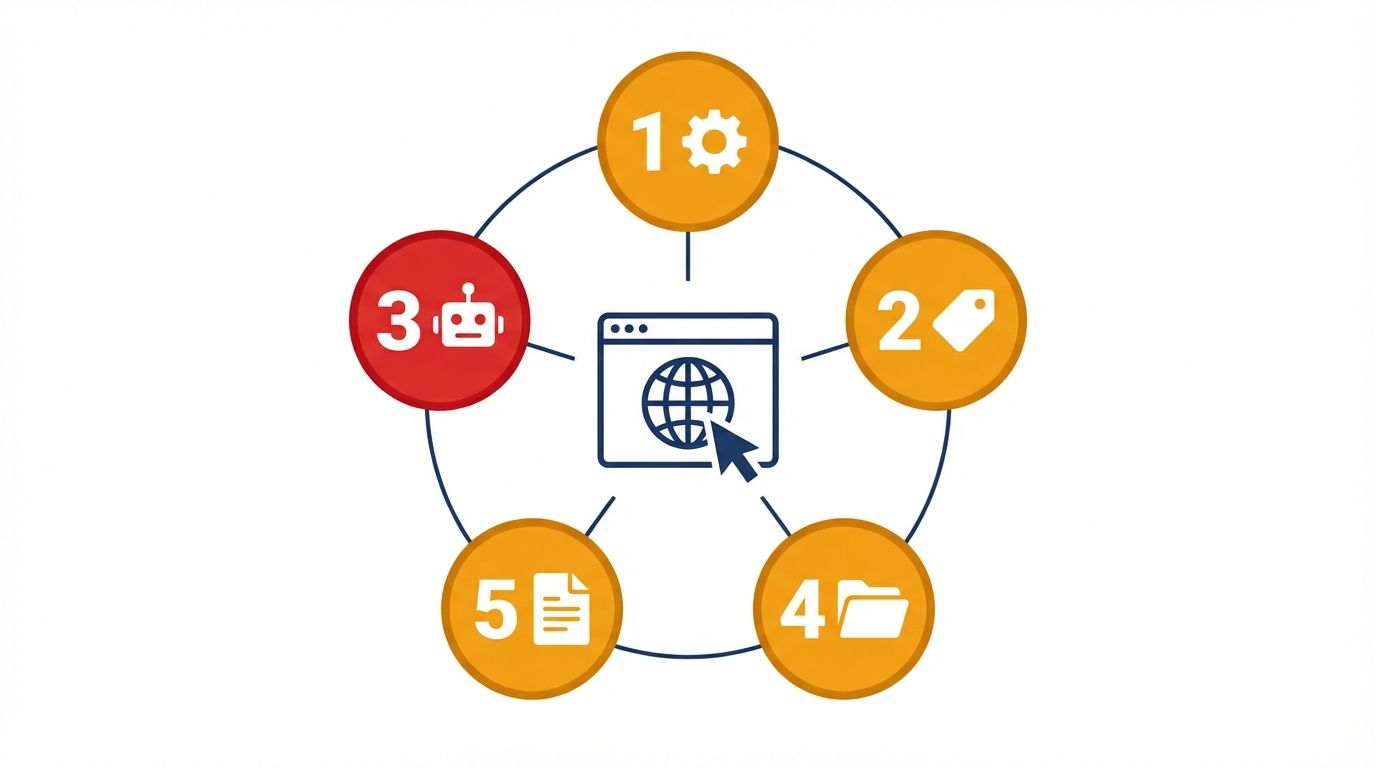
5 Signs Your Website Is Being Ignored by ChatGPT (With Real Examples)
DIRECT ANSWER You are not being penalized: no manual action, no algorithm flag, no notice in Search Console. Your site is indexed and live, yet when s...

The AEO Validation Loop: How to Confirm Your Fixes Actually Worked
DIRECT ANSWER Most AEO advice ends at the fix: "add JSON-LD schema," "enable SSR," "deploy an llms.txt file." The instructions are clear, the problem ...

Your Website Has a Credit Score for the AI Web - Do You Know Yours?
DIRECT ANSWER Right now a potential customer is asking ChatGPT about a product you sell, and whether the AI names you, ignores you, or gets your offer...

How Website AI Score Audits Your Site: The Engine Explained
DIRECT ANSWER The audit doesn't start when you press submit. It starts the moment the crawler requests your URL with a raw HTTP GET, strips every visu...

The Contextual Bridge Page: Engineering Semantic Topology for Multi-Hop RAG Resolution
DIRECT ANSWER A Contextual Bridge Page is not a content-marketing asset, it's a topological repair mechanism for orthogonality failures in high-dimens...

Log-Probability (Logprobs): Measuring AI Confidence
DIRECT ANSWER Stop guessing what a model "believes." Every token an LLM emits carries a logprob , the natural log of its probability, and by forcing a...

The Great Decoupling: Discover Core Update and AI Ad Injection
DIRECT ANSWER On February 5, 2026, Google deployed a standalone core update specifically for Google Discover, decoupling its ranking logic from the tr...
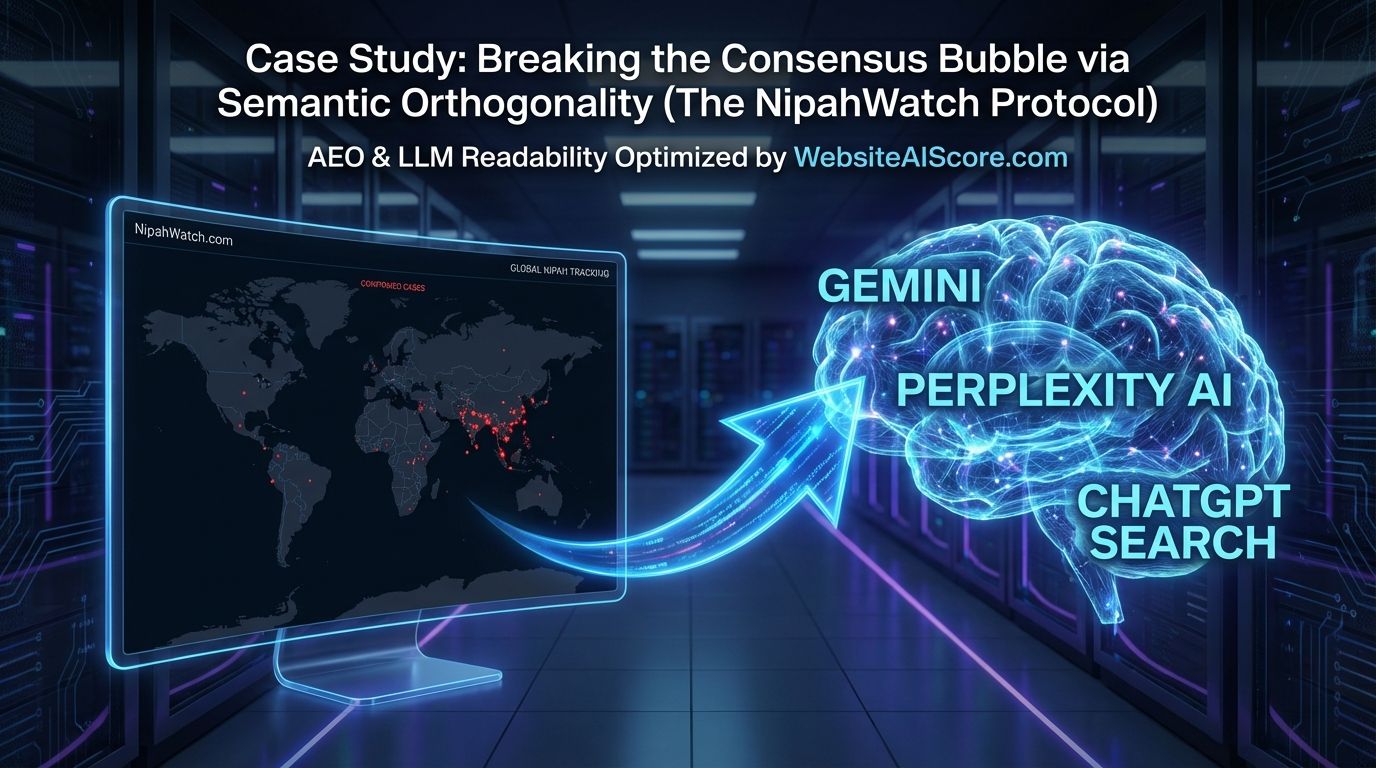
Case Study: Breaking the Consensus Bubble via Semantic Orthogonality (The NipahWatch Protocol)
CASE STUDY · CS_AEO_20260203_001 Classification: technical forensic analysis / AEO architecture. Governors: GIST compliance, vector displacement optim...

Adaptive Content Negotiation: Serving Markdown via Headers
DIRECT ANSWER A modern web server must serve two masters: the human, who demands interactivity and CSS, and the agent, who demands high-fidelity, low-...

The Needle in a Haystack Audit: Testing Context Loss
DIRECT ANSWER The most dangerous metric in LLM optimization is the context window size. Developers assume a model that accepts 128,000 or 1,000,000 to...

Embedding Collision: When Unique Products Look Identical
DIRECT ANSWER Embedding Collision is the flaw where semantic vector retrieval can't distinguish a "Blue Shirt" from a "Cyan Shirt" when the surroundin...

Sliding Window Chunking: Writing for the "Cut"
DIRECT ANSWER The integrity of a retrieval system is decided by where the knife falls. RAG ingestion slices documents into vector-ready segments, and ...

The 2026 Roadmap: From "Search" to "Inference" (Optimizing for MCP & A2A)
DIRECT ANSWER The web's "Hub-and-Spoke" architecture, where search engines route traffic to your site, has collapsed into a Terminal Architecture . In...

Temporal Validity: Escaping Training Stasis and the MinHash Deduplication Trap
DIRECT ANSWER The "freshness" signal of traditional SEO ( <lastmod> ) is functionally obsolete for LLM training. CCBot may fetch your updated UR...

Reverse-Engineering Google’s GIST: How "Max-Min Diversity" Impacts Your Traffic
TL;DR Google Research presented GIST (Greedy Independent Set Thresholding) at NeurIPS 2025, and the message for content creators is simple: being "cor...
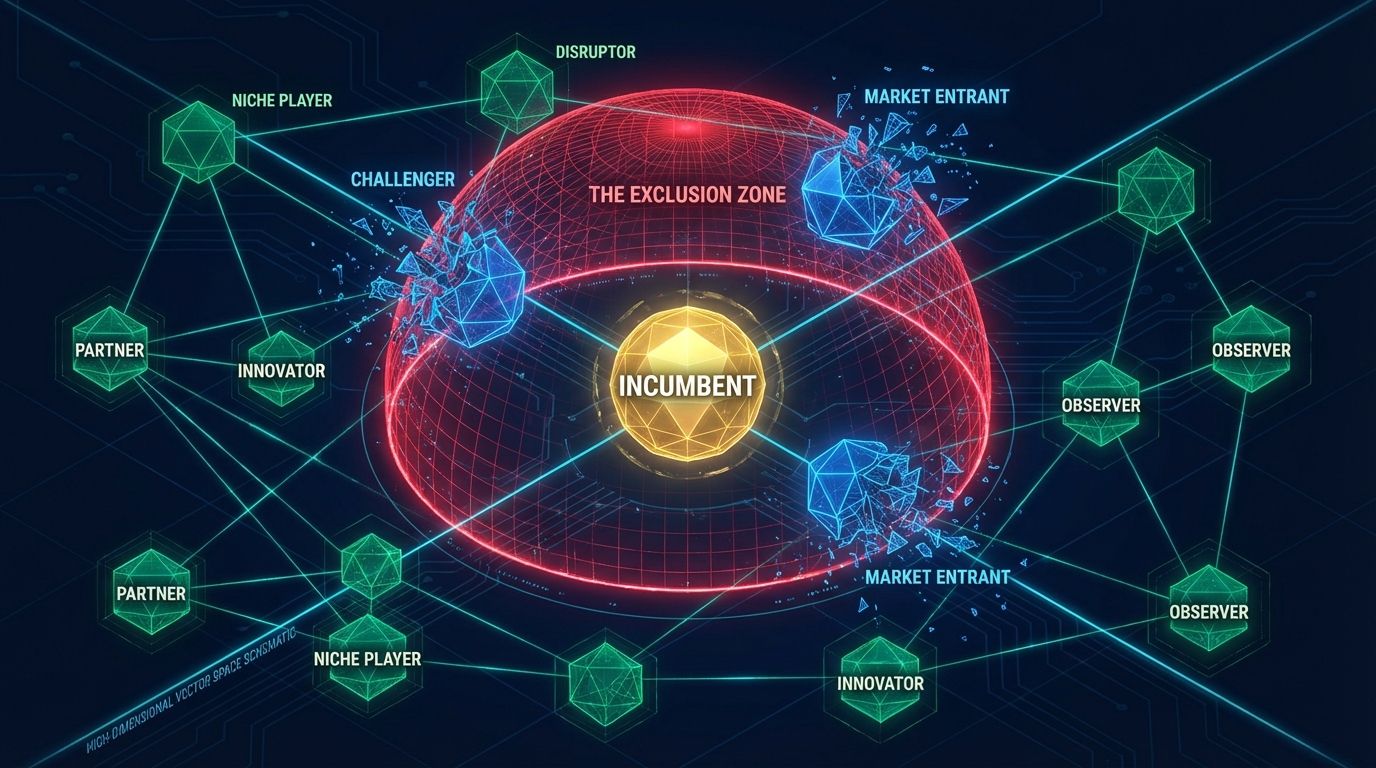
Optimizing for GIST: How to Measure Your Semantic Distance and Escape the "Consensus Bubble" in 2026
DIRECT ANSWER The era of relevance maximization is mathematically over. With Greedy Independent Set Thresholding (GIST) , Google pivoted ranking from ...

Intranet RAG Forensics: Reciprocal Rank Fusion vs. Distributed Querying
DEFINITION Unified indexing centralizes enterprise data into one corpus before retrieval, while federated search brokers queries out to source systems...

How to Architect Your E-Commerce API for Autonomous AI Buying Agents
DEFINITION The Agentic Protocol is a hybrid architectural standard that lets an autonomous AI agent move from reading a product page to settling a tra...

How to Engineer Alt Text for Vision-Language Models Without Breaking W3C Rules
DEFINITION The Hidden Embedding Pattern is a dual-layer metadata strategy that resolves the conflict between W3C accessibility (which mandates brief a...

How to Architect Audio RAG: Decoupling Timestamps from Semantic Embeddings
DEFINITION Decoupled audio RAG is an ingestion architecture that splits an ASR transcript into two parallel streams before embedding: a semantic strea...

How to Implement the Golden JSON-LD Pattern for Entity Recovery
DEFINITION Knowledge Graph injection is the practice of using the Schema.org sameAs property as a transitive assertion of identity equivalence ( owl:s...

Architectural Forensics: The Fortress vs. The Federation
The modern web is divided by a "Great Schism" in engineering philosophy. On one side, the Defensive Fortress archetype, represented by The New York Ti...

Forensic Audit: The Hidden Hydration Tax crippling headless SEO (Amazon vs. Gymshark)
The modern e-commerce stack is polarized by one trade-off: server-side resilience vs client-side velocity . The hypothesis here is that monolithic arc...

Case Study: Tesla Next.js vs. Ford AEM – A Forensic Architecture Audit
The automotive industry is mid-transition in the architecture of its digital customer experiences. This forensic audit examines two approaches to the ...

Just Crawl It? How Nike’s Hydration Latency is Losing to New Balance’s Static HTML
In modern e-commerce, architectural complexity often inversely correlates with crawlability. A comparative analysis of Nike.com and NewBalance.com rev...

The 100-Token Rule: Structuring Content for Maximum Retrieval
DEFINITION The Inverse Pyramid for RAG is a content structuring methodology designed specifically for Retrieval-Augmented Generation systems. Unlike t...

The Death of Keywords: Why AI Reads Your Content as Math
DEFINITION Vector Engine Optimization (VEO) is the strategic structuring of content to minimize the "cosine distance" between a user's intent and your...

Why AI Agents Ignore Your "Solutions" Page (And How to Fix It)
DEFINITION A Capability Definition is the structured, machine-readable translation of a B2B service offering. While a traditional "service page" uses ...

List of All Google Merchant Center "UCP" Schema Errors & How to Fix Them
DEFINITION The UCP Error Wave is the sudden spike in "missing field" warnings appearing in Google Search Console as of January 11, 2026. These errors ...

Products Disapproved? Here is the Instant Fix for Merchant Return Schema
If you're seeing the "Missing or invalid data [MerchantReturnPolicy]" warning in Google Merchant Center, your product listings are at immediate risk o...

Agentic Commerce: The Mandatory Schema for AI Transactions
DEFINITION The Universal Commerce Protocol (UCP) is the open interoperability standard designed to facilitate "Agentic Commerce": the automated purcha...

The Source of Truth: Why Our Content is "GEO Verified"
Executive Summary The GEO Protocol is a content engineering framework designed to bridge the gap between "human readability" and "machine ingestibilit...

1,500 Site Audit: The 6 Critical Errors Blocking Your AI Citations
DEFINITION The AI Readability Gap is the divergence between how a website appears to a human user (visually rich) and how it appears to an AI agent (s...

Brand Safety in the AI Era: Coupling Claims with Disclaimers
DEFINITION Compliance AEO (Agent Optimization) is the engineering discipline of coupling legal disclaimers, medical warnings, and financial disclosure...

Why ChatGPT Can't Figure Out Who You Are (And How to Fix It)
DEFINITION Personal Bio Optimization (for AI) is the strategic structuring of an individual's "About" page so LLMs and Knowledge Graph crawlers can un...

The Abstract Strategy: How to Get Cited Without Giving Away the News
DEFINITION Publisher AEO (Agent Optimization) is the strategic management of how news content is ingested, cited, and monetized by generative AI model...

Beyond the Map Pack: How to Rank in ChatGPT's "Near Me" Results
DEFINITION Local AEO (Agent Optimization) is the process of structuring location data (N-A-P), operating hours, and service sentiment so AI agents (Ch...

AEO for E-Commerce: Pricing & Stock Status in the AI Era
DEFINITION E-Commerce AEO (Agent Optimization) is the technical process of structuring product data (price, availability, shipping, returns) so genera...

The Copilot Trap: Why AI Breaks Your API Integration
DEFINITION API AEO (Agent Optimization) is the practice of structuring developer documentation so AI coding assistants (GitHub Copilot, Cursor, Devin)...

SaaS vs. E-Com: The Divergent Paths of Generative Optimization
DEFINITION The Vertical Split is the strategic divergence in Generative Engine Optimization where different industries need fundamentally different "r...

The "Three Dots" Audit: Why Google Doesn't Trust Your Brand
DEFINITION The "About This Result" Test is a diagnostic protocol for verifying whether a brand has been reconciled as an Entity in Google's Knowledge ...

Signal-to-Noise: Why RAG Pipelines Ignore Your Expensive Website
DEFINITION Token Efficiency is the ratio of "semantic signal" (valuable information) to "structural noise" (HTML tags, CSS classes, script payloads) w...

Reverse Engineering Perplexity: Analyzing the "View Sources" UI
DEFINITION The "View Sources" UI is the frontend component generative answer engines (Perplexity, SearchGPT, Gemini) use to display citations for a sy...

Why Your Traffic is Dropping But Your Revenue is Safe (The AI Paradox)
DEFINITION The Zero-Click Citation is an AEO conversion where an AI agent (Perplexity, ChatGPT, Gemini) directly answers a user's query using your bra...

The Dark Funnel: How to Track Perplexity and ChatGPT in GA4
DEFINITION Perplexity Referral Traffic is the segment of inbound visits originating from the Perplexity.ai answer-engine interface, identified in GA4 ...

Why Google Analytics Can't See AI Bots (And How to Fix It)
DEFINITION Server Log Analysis for AI is the practice of mining raw access logs (from Nginx, Apache, or CDN edges) to filter, verify, and quantify req...

The "Nuclear Option" Backfire: Why Blocking Common Crawl Destroys Your Visibility
DEFINITION A granular robots.txt strategy is the practice of selectively allowing or disallowing specific AI crawlers based on their downstream utilit...

The <details> Standard: Optimizing Q&A Patterns for RAG Pipelines
DEFINITION The <details> and <summary> tags are a pair of native HTML5 elements that create a semantic disclosure widget (accordion), expl...

The 200ms Trap: Why RAG Agents Ignore Your JavaScript
DEFINITION The "empty shell" effect is a critical crawl failure where an AI agent or search bot receives a blank or near-empty HTML document (often co...

Stop Being Admin: How to Verify Authorship for Large Language Models
DEFINITION The citation_author tag is an HTML <meta> tag originally developed for academic indexing (Google Scholar) that modern LLMs repurpose ...

The Token Tax: How HTML Tables Break Your AI Rankings (And How to Fix It)
DEFINITION Table optimization for LLMs is the practice of structuring tabular data in a format that minimizes token usage while maximizing semantic cl...

Stop Orphaned Data: The Guide to Nested Schema.org Architecture
DEFINITION JSON-LD Nesting is the architectural practice of embedding one Schema.org object inside another (placing an Organization object inside an O...

Stop Wasting Tokens: Why You Need an /llms.txt File for Your Website
DEFINITION The /llms.txt standard is a proposed web convention (similar to robots.txt) that gives Large Language Models a curated, Markdown-formatted ...

Share of Model vs. Share of Search: The New KPIs for the AI Era
TL;DR Rank tracking measures the wrong thing now. The new North Star is Share of Model (SoM) : how often AI cites your brand as the solution. You can ...

Brand Safety in the AI Era: Why ChatGPT Is Lying About Your Pricing
TL;DR AI hallucinates your pricing because your data isn't anchored. Three fixes: put pricing in HTML tables (not paragraphs), use explicit negation t...

Your "About Us" Page Is Useless: Why You Need an "Entity Home" in 2025
TL;DR Your "About Us" page is full of storytelling. AI crawlers need facts. The fix is an Entity Home : a definitive source-of-truth page built on a d...

Beyond the Blue Link: A Strategic Framework for the "Search Everywhere" Era
TL;DR Google isn't dead. Google is now the backbone feeding the AI ecosystem. When ChatGPT or Perplexity answers a question, it pulls from Google/Bing...

The Chunking Mismatch: Why Your HTML Tags Are Killing AI Retrieval
TL;DR Search engines don't read pages. They read chunks. Your beautiful design might be severing the connection between your user's question and your ...

Why AI Can't Read Your Site: The "Semantic Schism" of Fixed-Size Chunking
TL;DR RAG pipelines chop your HTML into fixed-size chunks (around 500 tokens each) and a blind guillotine cuts wherever the count hits. If the cut lan...

How to Create the "Perfect Article" Using ChatGPT: A Structural Guide for GEO
TL;DR The "perfect article" in 2025 is a hybrid: machine structure (semantic clusters, inverted pyramid, schema wrapper) layered with human soul (opin...

Myth vs. Reality: Does AI Content Actually Hurt Your SEO?
TL;DR Google doesn't penalize AI content. It penalizes low information gain . The March 2024 update killed sites publishing mass-produced average cont...

The Context Window Economy: Why AI Ignores Your Best Content
TL;DR LLMs have a documented Lost-in-the-Middle attention problem. They remember the start and end of a document but lose track of the middle. If your...

The Invisible Tax: How Missing 3 Simple Files Is Killing Your AI Traffic
TL;DR Three small files ( robots.txt , Schema.org JSON-LD , and llms.txt ) decide whether AI engines can find, understand, and cite your content. Most...

Is Your Website Invisible to ChatGPT? The Free Audit Checklist to Fix It
TL;DR GEO is too complex to execute from memory. The WebsiteAIScore GEO Audit Checklist breaks AI optimization into a prioritized series of binary yes...

The AEO(AI Engine Optimisation) Playbook: Technical Guide to Dominating the 'Answer Box' in 2025.
TL;DR Answer engines pick one primary source per query. AEO (Answer Engine Optimization) is the discipline of becoming that source. The core lever is ...

The "SEO is Dead" Lie: Why 90% of Marketers Are About to Get Left Behind.
TL;DR SEO isn't dead. It's splitting into two interconnected disciplines: SEO is the science of retrieval (can the engine find your site?), GEO is the...

From Traffic to Citations: Why Your SEO Strategy is Failing in 2025
TL;DR Less than half of Google searches now end in a click to the open web. AI Overviews, ChatGPT, and Perplexity resolve queries inside the engine, l...

Hallucinations vs. Reality: How to Stop AI from Lying About Your Brand
TL;DR LLMs are probabilistic prediction engines, not databases. When they don't have your real data, they invent plausible-looking facts about your br...

The Invisible Website: Why ChatGPT and Gemini Can't "Read" Your Current Site
TL;DR Modern websites built on React, Vue, or Angular send AI crawlers a near-empty HTML shell because the real content loads via JavaScript after pag...

The Great Shift: Why Generative Engine Optimization (GEO) is Replacing SEO
TL;DR Search behavior shifted faster than most playbooks updated. 58% of online queries are now conversational and routed to AI engines that return on...

The Era of the Invisible Website: Why Your Business Needs a "Credit Score" for the AI Web
TL;DR The web's economic model just changed. AI engines (ChatGPT, Claude, Perplexity, Gemini) now resolve user queries directly instead of routing the...