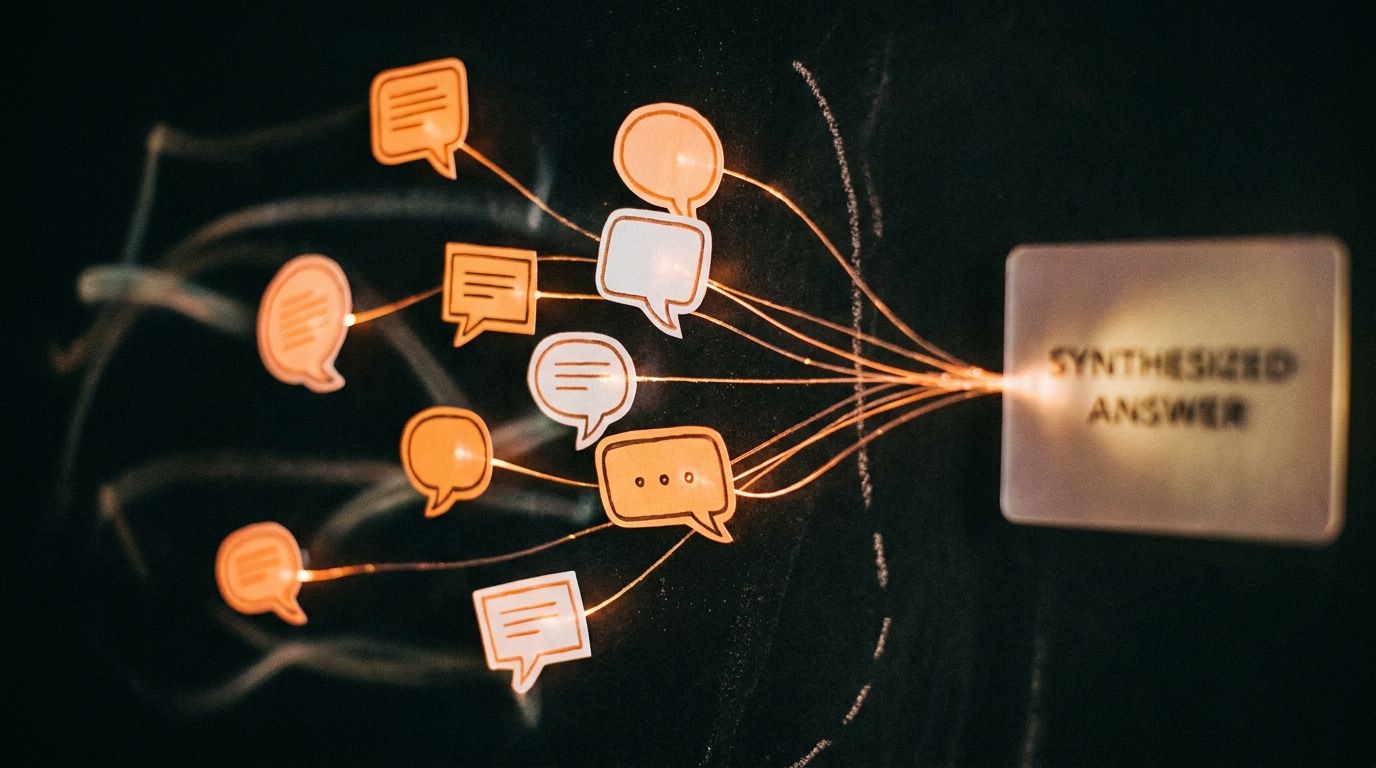
Internal linking helps AEO by doing two things engines rely on: it helps crawlers discover and reach your content, and it builds topical relationships that establish which of your pages is the authority on a subject. The pattern that works is the citation-pull: link related pages to a single canonical resource with descriptive, consistent anchor text, so the engine concentrates topical authority on the page you want cited instead of splitting it across near-duplicates. Random or navigation-only linking wastes this. Deliberate internal linking tells the engine where your expertise is concentrated, which is a direct input to which page it selects.
Internal linking is treated as an SEO chore, and its AEO role is underused. For answer engines, internal links do two jobs that bear directly on citation: they help crawlers find and reach your content, and they signal the topical relationships among your pages, which helps an engine work out which page is your authoritative source on a subject. Done deliberately, internal linking concentrates authority on the pages you want cited. Done as an afterthought, it scatters that authority and leaves the engine to guess.
The pattern to build is the citation-pull: an internal linking shape that pulls topical authority toward one canonical page, making it the obvious source for the engine to select.
Job one: discovery and reachability
Before an engine can cite a page, it has to find and reach it, and internal links are a primary path for that. A page buried with few internal links pointing to it is harder to discover and may be crawled less, and a page reachable only through JavaScript navigation may not be reached at all, which compounds the rendering failures that already hide content from engines. The baseline requirement: every page you want cited should be reachable through crawlable HTML links, and important pages should have more internal links pointing to them, because reachability is a precondition for citation, not a nicety.
Job two: topical authority concentration
The higher-value job is signaling where your expertise concentrates. When many related pages link to one canonical resource on a topic with consistent, descriptive anchor text, the engine reads that page as your authority on the subject. This is the citation-pull: you are pulling topical signal toward the page you want selected. The alternative, several near-equivalent pages on the same topic linking randomly or not at all, splits the authority so no single page is clearly the source, and the engine either picks weakly or picks a competitor whose signal is concentrated. This connects to why redundant content hurts you: internal linking is how you designate the one page that should carry the topic.
Anchor text is the signal
The anchor text carries the topical signal, so it has to be descriptive and consistent. Linking to your canonical guide with anchor text that names the topic ("how internal linking concentrates authority") tells the engine what the target page is about; linking with "click here" or "read more" wastes the signal entirely. Consistency matters too: when related pages link to the canonical resource with anchor text that agrees on the topic, they reinforce one clear signal rather than a muddle. This is the on-site companion to how consistent external references anchor an entity: consistent internal anchors anchor a topic.
Building the citation-pull structure
Pick the page you want cited for a topic and make it the canonical resource, the most complete, best-structured page on that subject. Then link your related pages to it with descriptive, topic-naming anchor text, so authority flows inward. Avoid creating near-duplicate pages that compete with the canonical one, they split the pull, and either consolidate them or clearly subordinate them with links pointing up to the canonical page. The structure to aim for is a hub: one authoritative page, many supporting pages linking to it, anchor text agreeing on the topic. This is the internal-linking expression of concentrating your signal rather than diffusing it.
Concretely, imagine a five-page cluster on schema markup. The canonical resource is your complete guide to schema for AI citations. The four supporting pages, one on Product schema, one on FAQ schema, one on validation tooling, one on common schema mistakes, each link to the guide with anchors like "the complete schema-for-citations guide" and "how schema properties move citations," while the guide links down to each with anchors naming their subtopic. The engine reading this cluster sees four related pages agreeing that one page is the authority on the topic, and when a schema query arrives, the selection is not a coin flip among five candidates, it is the page the whole cluster already nominated.
What to avoid
Avoid navigation-only internal linking, where pages connect only through menus and never contextually, since contextual links in content carry the topical signal that navigation links do not. Avoid generic anchor text that wastes the signal. Avoid orphan pages with no internal links pointing to them, they are hard to discover and carry no concentrated authority. And avoid building competing near-duplicates that fight each other for the same topic, which is the most common way sites accidentally dilute their own citation-pull.
Internal linking gets optimized for humans navigating or for passing ranking signal, and its most valuable AEO function, telling an engine which single page is your authority on a topic, gets ignored. The sites that win topic citations are not the ones with the most pages on a subject, they are the ones whose linking makes unmistakably clear which one page is the source, so the engine never has to guess. In the selection economy, ambiguity about where your expertise lives is a citation you hand away, and internal linking is the cheapest tool you have to remove that ambiguity.
Sources
- Google Search Central, internal links and crawlability: how link structure affects discovery and understanding. developers.google.com
- Google, creating helpful, reliable content: the topical-authority signals internal linking supports. developers.google.com
- Website AI Score, AEO scoring signals: where topical concentration fits in the signal set. View article
- Website AI Score, information gain: why near-duplicate pages that split the pull hurt you. View article
- Website AI Score, knowledge graph injection with sameAs: the entity analog of consistent anchoring. View article