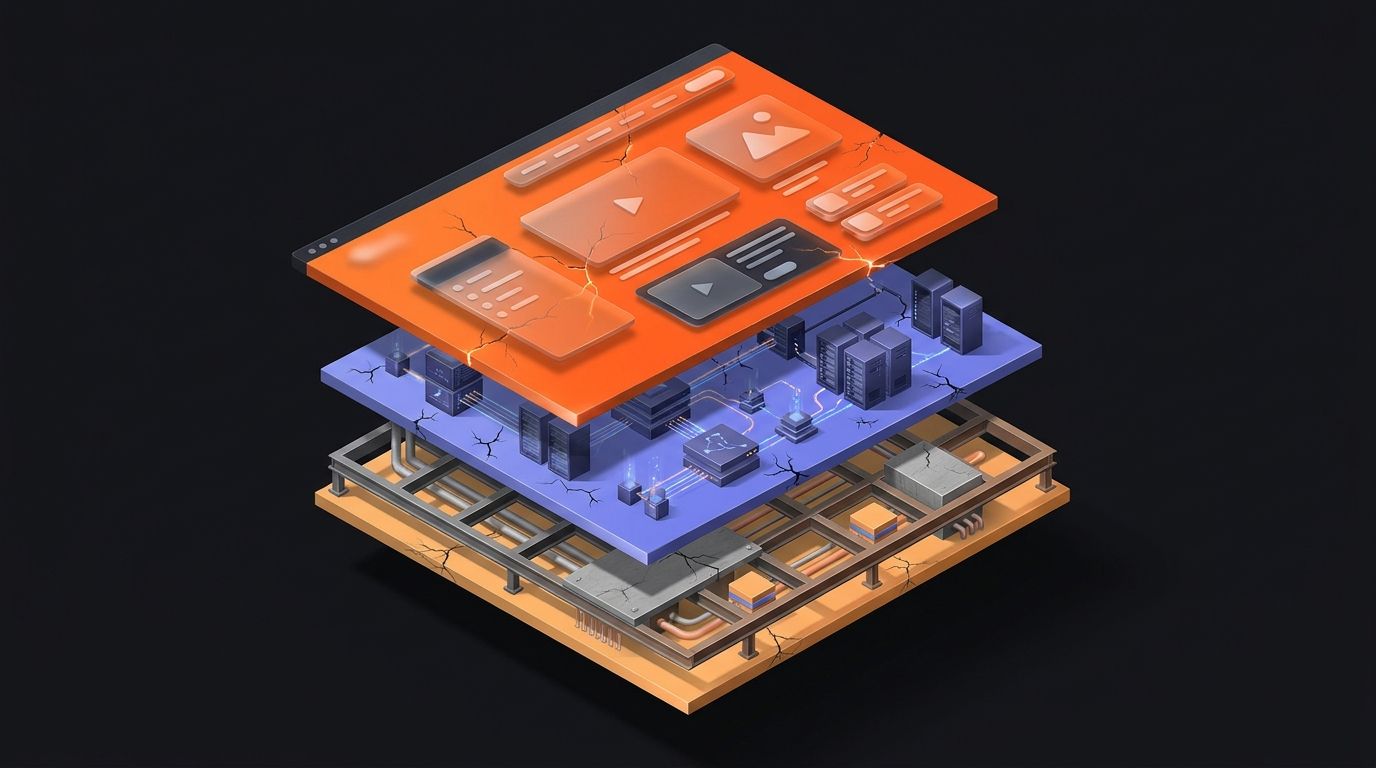
The typical B2B SaaS homepage is built to convert a human visitor and is structurally incapable of being cited by an AI engine. Twelve specific things cause it: a vague hero tagline, no extractable factual claims, content rendered in JavaScript, feature names nobody searches, no entity definition, missing schema, testimonial walls, gated specifics, no pricing, jargon instead of plain description, a single conversion-focused page instead of answerable sub-pages, and zero original data. Each is a fixable failure. This is all twelve, why each blocks citation, and the fix.
A B2B SaaS homepage is one of the hardest pages to get cited, and the reason is that it is optimized for a job that conflicts with citation. Its job is to convert a visitor: a punchy tagline, social proof, a demo button. That design produces a page with almost nothing an AI engine can extract, because the things that convert humans, aspirational language and visual persuasion, are exactly the things an engine cannot quote. The homepage is doing its job and failing a different one.
The twelve failures below are common because they are features, not bugs, of conversion-first design. Fixing them does not mean abandoning conversion; it means adding the extractable layer that lets the page serve both. Here they are.
Content failures (1 to 5)
The vague hero tagline is failure one. "Work smarter, not harder" tells an engine nothing about what you do, so it cannot match you to any query. The fix is a plain, specific statement of what the product is and who it is for, present somewhere in the page text even if the hero stays aspirational. Failure two, no factual claims, follows from it: a page of aspirational language contains nothing quotable, because an engine quotes facts, not vibes. Add concrete, checkable statements about what the product does.
Failure three is leading with feature names nobody searches: your proprietary "FlowSync Engine" means nothing to an engine matching real queries, which are about problems and outcomes, not your brand names for things. Describe the function in the words buyers use before you name it. Failure four, jargon instead of plain description, is the same disease at sentence level: category jargon that insiders parse and engines cannot map to plain-language queries. Failure five, zero original data, is the gain problem: a homepage with no distinct fact contributes nothing beyond the consensus and earns no citation on that basis.
Technical failures (6 to 8)
Failure six is the empty-shell problem: a homepage whose content renders in JavaScript is invisible to non-rendering AI crawlers, which see a skeleton. This is the most catastrophic of the twelve because it invalidates everything else; perfect content nobody can read is no content. The fix is server-side rendering or pre-rendering so the substance is in the raw HTML. Failure seven, missing schema, means no structured data telling the engine what entity the page represents, leaving it to infer everything from text it may not even be able to read.
Failure eight, no entity definition, is subtler and specific to homepages. The homepage is where your entity should be defined, what the company is, what it does, how it connects to its known profiles, and a homepage that is all marketing and no entity definition leaves the engine unable to resolve you as a known thing. This is the difference between a marketing homepage and an entity home, and most SaaS homepages are entirely the former, which means the engine has no anchored definition of the company to attach any citation to.
Structural failures (9 to 12)
Failure nine, the testimonial wall, fills the page with subjective social proof that contains no extractable fact, so the engine reads praise it cannot quote. Failure ten, gated specifics, hides the concrete information, the real capabilities, the actual numbers, behind a demo request or a form, so the engine reaches the gate and not the substance. Failure eleven, no pricing, removes the single most-asked B2B question from the page entirely; when buyers ask an engine what something costs, a page with no pricing cannot answer and a competitor who shows pricing wins that citation.
Failure twelve is the structural root: a single conversion-focused page instead of a set of answerable sub-pages. A homepage cannot answer every buyer question well because it is built to drive one action. The fix is the architecture itself, a homepage that converts plus dedicated pages that each answer a specific question, pricing, use cases, comparisons, integrations, each built to be cited for its own query. A site showing several of these failures together exhibits the broader signs of AI invisibility, and the homepage is usually where the pattern is most concentrated.
The common cause and the real fix
Every one of the twelve traces to a single root: the homepage was built to convert a human, not to answer a question. Those are different jobs with different requirements, and conversion-first design actively produces the citation failures, because the moves that persuade a human, aspiration, brevity, visual proof, gated value, are the moves that starve an engine. This is not a flaw in the homepage; it is the homepage doing what it was designed to do.
The contrarian and load-bearing point is that the fix is almost never "rewrite the homepage." A homepage that converts well is a business asset you should not break. The fix is to add the answerable layer the engine needs, extractable facts, plain descriptions, entity definition, schema, and above all the dedicated sub-pages that answer the specific questions the homepage cannot. You keep the converting homepage and you build the citable architecture around it. The teams that get cited are not the ones with the cleverest taglines; they are the ones who recognized that conversion and citation are different jobs and built for both, which is the foundation of the full AEO signal set applied to a SaaS site specifically.
Sources
- Google, helpful content guidance: what makes content answerable and citation-worthy. developers.google.com
- Schema.org, Organization and SoftwareApplication: the entity types a SaaS homepage should define. schema.org/SoftwareApplication
- OpenAI, ChatGPT search: how the engine extracts and cites factual claims from pages. help.openai.com
- Website AI Score, About Us vs entity home: defining the company entity the homepage usually omits. View article
- Website AI Score, signs of AI invisibility: the broader symptom set these failures produce. View article