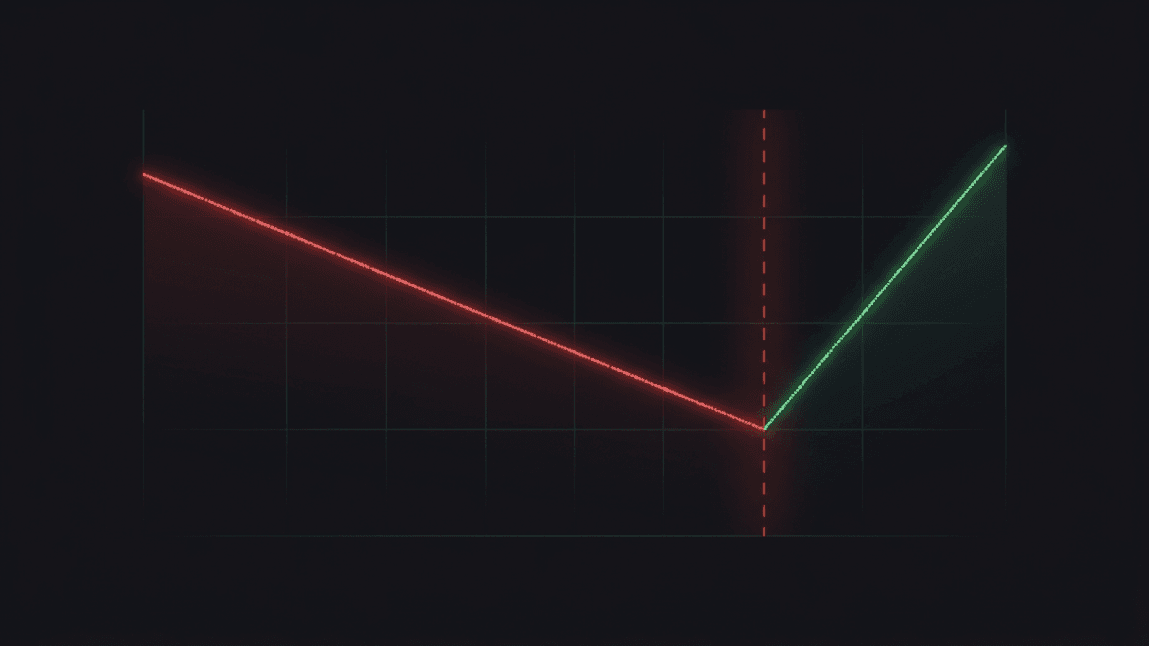
AI citation decay is a reduction in how often, or how consistently, an AI system cites a page over time while the page itself remains available and unchanged. An article that ChatGPT, Gemini, or Perplexity cited reliably three months ago is cited less and less often, until it stops appearing, because the engines' view of the topic moved while the page stood still. It has four common causes: fresher competing sources, a shifted consensus that makes the page's framing look dated, engine updates that reweight trust signals, and freshness signals on the page itself going stale. Decay is measurable by tracking citation frequency over repeated queries, and it is reversible with a targeted refresh. The free scan shows current standing; the Content Creator rewrites the page to recover it.
The uncomfortable property of AI citations is that they are rented, not owned. A page is not cited because it earned a permanent place; it is cited because, at the moment of the query, it was the best available source. When better, fresher, or more trusted sources appear, the engine's choice moves, and the page decays out of the answer with no notification, no traffic cliff, no error, just a slow fade that most teams notice months after it started.
Seen as a mechanism rather than bad luck, decay becomes preventable, and the mechanism is relative: your page did not get worse, the field got better around it.
What causes AI citation decay?
Four things, usually in combination. Competitive displacement: a newer source covers the same question with more specificity or a fresher date, and the engine prefers it. Consensus drift: the way the field talks about the topic moves, so a page that framed it correctly a year ago now reads as slightly off, and engines weight alignment with current understanding. Engine reweighting: the retrieval and trust models update, and a page that won on the old weights loses on the new ones. And stale freshness signals: an unchanged modified date, aging facts, a missing review, all read to the engine as "possibly outdated," which is fatal for time-sensitive topics. Each cause has a distinct signature in your citation data, and the signature tells you which fix to apply.
How do you detect citation decay?
You cannot detect it from a single query, because citations are probabilistic and one result is noise. Detection requires a baseline and repetition: query the engines for your core topics on a fixed cadence, record how often the page is cited across repeated runs, and watch the frequency trend. Decay shows as a steady decline over weeks, distinct from the random flicker of a volatile citation or the sudden drop of a broken page. It is an observed outcome, not evidence that an engine has assigned the page a permanent negative score. The five citation patterns give the taxonomy: decay is the slow downward slope, and recognizing the shape is how you catch it early instead of after the citations are gone.
How is decay different from citation volatility?
They look similar in a single reading and mean opposite things. Volatility is a citation that flickers, present one query, absent the next, with no trend, and it signals a page that is a marginal candidate the engine sometimes picks. Decay is a citation with a trend: it was stable, and it is sliding. Volatility calls for strengthening the page so it becomes the clear pick; decay calls for refreshing the page so it re-enters the competition it is losing. Confusing the two wastes the fix. The tell is the slope: flat-and-noisy is volatility, downward-and-steady is decay. A third pattern, disappearance, is a sudden drop to zero, and it almost always means a broken page or a blocked crawler rather than a competitive shift. Volatility has its own diagnosis and fix.
How do you reverse citation decay?
With a targeted refresh, matched to the cause. If newer sources displaced you, add the specificity they have and you lack, a worked example, a current figure, a named mechanism. If the consensus drifted, update the framing so the page reflects how the topic is understood now. If freshness signals went stale, update the facts, the dates, and the schema's dateModified honestly, not cosmetically. The Content Creator does this in two moves: Diagnose mode identifies the specific gaps between the decayed page and what the query now demands for one credit, and Rewrite mode restructures the page to close them while preserving every existing fact, for four. Then re-scan and keep tracking, because recovery is confirmed by the frequency curve turning, not by the edit going live.
How do you prevent it?
Track before you need to. A monthly baseline on your core queries costs an hour and turns decay from a surprise into a trend line you act on at the first bend. Schedule reviews for time-sensitive pages so freshness never goes stale by neglect. And design for durability: pages built on mechanism and specific examples decay slower than pages built on current consensus, because mechanism does not drift. A free account's 10 credits cover a full diagnose-and-rewrite cycle on your most valuable page, which is usually where decay costs the most and is noticed last.
Filing a citation as a milestone, something achieved and done, is what lets decay run unwatched. A citation is a position in a contest that never closes, held only as long as the page is the best source available, and the sites that hold their citations are not the ones that earned them hardest but the ones that noticed the slope first. Earn the citation, then keep measuring it, because the measurement is the only warning you will get.
Sources
- Google, AI features and your website: how AI surfaces select and refresh their sources. developers.google.com
- OpenAI, ChatGPT search: live retrieval and why freshness affects citation. help.openai.com
- Website AI Score, five citation patterns: the taxonomy that distinguishes decay from volatility and ghosting. View article
- Website AI Score, Content Creator: Diagnose and Rewrite modes for the targeted refresh. websiteaiscore.com/content-creator
- Website AI Score, information gain: why consensus-built pages decay faster than mechanism-built ones. View article